1898 Trans-Mississippi $2 Mississippi River (Scott #293)
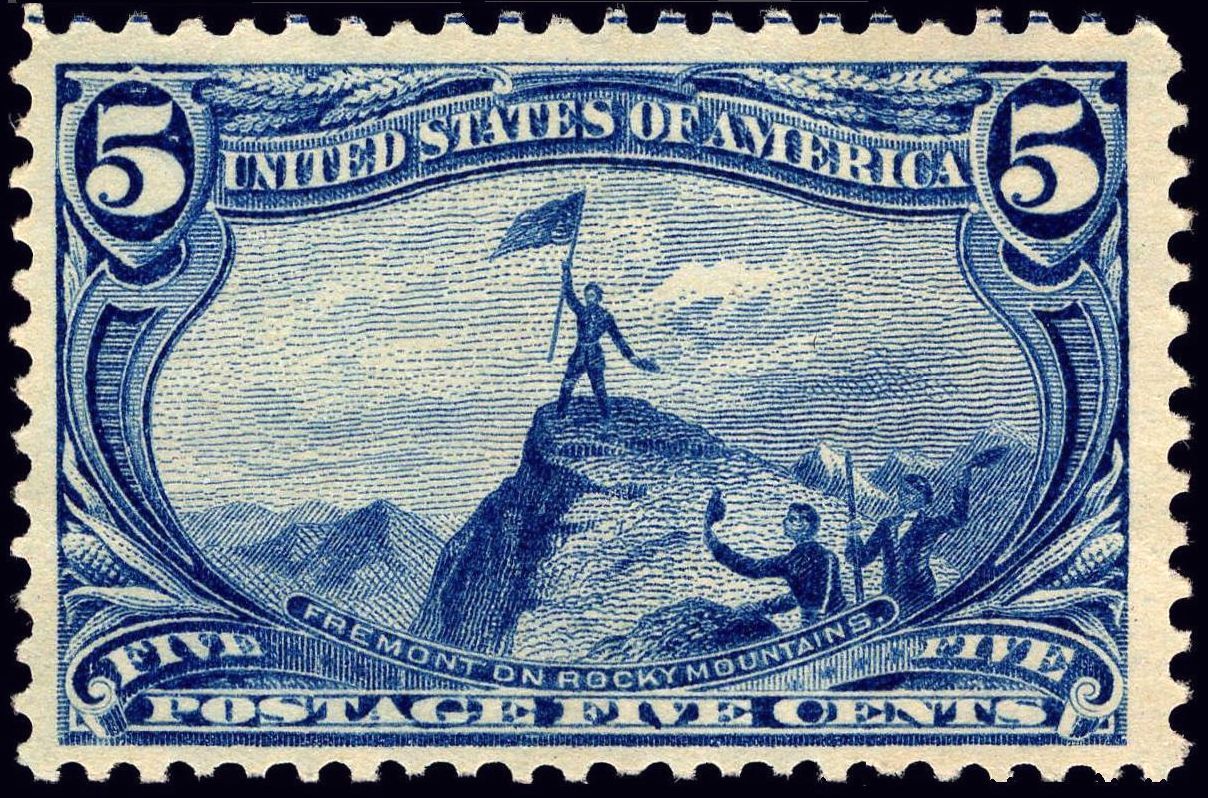
1898 United States 5c Trans-Mississippi stamp, same series as #293. Source: U.S. Post Office / Bureau of Engraving and Printing. Public Domain. Via Wikimedia Commons.
The $2 Trans-Mississippi stamp of 1898 is one of the most coveted pieces in all of American philately. With only 56,200 copies printed and an unknown quantity later destroyed, Scott #293 sits at the very top of the Trans-Mississippi series in both face value and collector desire. Whether you are chasing a well-centered mint example or tracking down a crisp used copy on original envelope, this stamp rewards those who understand its context, its rarity, and the variables that separate a run-of-the-mill example from a spectacular one.
The Omaha Exposition and the Birth of the "Omahas"
The summer of 1898 was a strange one for America. The Spanish-American War was underway, gold fever had turned California into a modern state, and the great American West was beginning to look like the future rather than the frontier. To celebrate that transformation, Omaha, Nebraska hosted the Trans-Mississippi and International Exposition, running from June 1 through November 1, 1898.
Postmaster General James A. Gary saw an opportunity. Fresh off the success (and controversy) of the 1893 Columbian Exposition stamps, he authorized a nine-stamp commemorative series to promote the event. Unlike the Columbians, the Trans-Mississippi stamps were originally planned in two-color printing. The war changed that. The Bureau of Engraving and Printing lacked the manpower for two-color press work while producing war revenue stamps, and the commemoratives were printed in single colors instead.
The result was arguably better for collectors. The single-color engraved designs, each based on original paintings and drawings depicting Western life, are considered by many specialists to be the most beautifully executed American stamps of the 19th century.
What the $2 Stamp Actually Shows
Scott #293 depicts the Eads Bridge spanning the Mississippi River at St. Louis, Missouri. Designed by James B. Eads and completed in 1874, the bridge was an engineering marvel when built, the longest arch bridge in the world at the time, stretching 6,442 feet total. In the late 19th century the Mississippi River was the symbolic dividing line between East and West, and placing it on the highest-denomination stamp in the series was a deliberate statement: this is the gateway to everything the exposition celebrates.
The stamp was printed in orange-brown, a warm and distinctive color that photographs well and ages gracefully in collections. It measures 34.5 x 22mm in the standard double-width commemorative format that the Trans-Mississippi series shared with the earlier Columbians.
Technical Specifications
| Specification | Detail |
|---|---|
| Scott Number | 293 |
| First Day of Issue | June 17, 1898 |
| Face Value | $2.00 |
| Color | Orange Brown |
| Printing Method | Flat Plate Engraved |
| Perforations | 12 |
| Watermark | Double-line USPS |
| Quantity Printed | 56,200 (some later destroyed) |
| Printing Bureau | Bureau of Engraving and Printing |
That quantity figure is critical. By comparison, the 1-cent value in the same series had 70,993,400 copies printed. The $2 value is more than a thousand times rarer at press. Factor in the unknown quantity that was deliberately destroyed when the series closed, and the surviving population shrinks further.
Condition Grades and Market Values
The Trans-Mississippi $2 is graded on the standard philatelic scale, and condition has an outsized effect on price because the margins on these double-wide stamps were often tight coming off the press. Centering is the first thing any serious buyer looks at.
| Condition | Description | Approximate Catalog Value |
|---|---|---|
| VF-XF Used | Clear margins, neat cancel, sound | $400 - $600 |
| F-VF Mint (HR) | Hinge remnant, original gum, reasonable centering | $500 - $800 |
| VF Mint (NH) | Never hinged, good centering, original gum | $1,700 - $2,500 |
| XF-Superb NH | Perfect centering, full OG, no faults | $3,750 - $6,000+ |
| MS65 Grade (PSE/PF) | Expertized superb, certified | $8,000 - $15,000+ |
The Scott Catalogue value for a mint, never-hinged example sits around $1,700 to $2,500 depending on centering, but the real market moves above that for exceptional copies. The auction record for the date was set at the 2007 FUN sale, when an NGC-graded MS65 example sold for $161,000, shattering the previous record of $62,100.
Used copies present their own collecting universe. A stamp on original cover, especially with a clear first-day or exposition postmark, multiplies value significantly. Block-of-four examples, particularly with intact plate numbers in the selvage, carry strong premiums.
What to Watch for When Buying
The Trans-Mississippi $2 has been forged. The most dangerous fakes are unused stamps with added gum, or mint examples that have been cleaned, reperfed, or had thin spots repaired. Any example sold as "mint, never-hinged" above about $1,000 should carry a certificate from a recognized expertizing service: the Philatelic Foundation (PF) or Professional Stamp Experts (PSE) are the standard for United States material.
Centering: The hardest single variable to find well on this issue. The sheet margins were not generous. Four-margined examples with even margins all around are genuinely scarce. Stamps with margins touching or cutting into the design are common and worth a fraction of well-centered copies.
Gum: Original gum is preferred. Lightly hinged gum (LH) is acceptable to most collectors. Never-hinged (NH) commands the highest premiums. Regummed stamps are frauds and are worth nothing above their face value as specimens.
Color: Fresh orange-brown color is preferred. Many copies show varying degrees of oxidation or toning. Stamps with a dull, brownish cast are discounted versus bright, fresh examples.
Cancellations: For used copies, a light or partial cork cancel is preferred. Heavy USPS machine cancels or manuscript defacements detract. Rare cancellation types (pen cancel by a prominent figure, railroad post office markings, exposition postmarks) can actually add value to an otherwise ordinary used stamp.
Faults: Thins, tears, creases, and pinholes are the four horsemen of philatelic disappointment. Even a minor thin on a $2 Trans-Mississippi cuts the value by 50-75%.
The Full Trans-Mississippi Series in Context
The nine stamps in the series ran from 1 cent (Western cattle in a storm) up through $1 (the "Western Mining Prospector" depicting a heroic figure) and then the $2 capstone. The $1 (Scott #292) is itself a scarce stamp with a mintage of only 56,900, but the $2 edges it out as the top prize because of the combination of the lowest quantity and the highest face value, which limited postal use to a narrow range of transactions.
Collectors seeking to assemble the complete series must budget accordingly. A complete mint set in very fine condition will run $5,000 to $12,000 depending on centering and gum. A complete never-hinged set in superb condition is a genuinely exceptional holding.
The Investment Case
The Trans-Mississippi $2 has appreciated steadily over decades. The 2007 record price came from a perfect storm of collector enthusiasm and a well-publicized auction, but even lower-grade examples have seen consistent demand. US classics of this caliber benefit from a large, well-organized collector base, excellent auction infrastructure, and expertizing standards that protect buyers from forgeries and fakes.
Mint examples in the F-VF range represent the entry point for most serious collectors. Never-hinged superb examples occupy a tier where demand consistently outstrips supply at auction.
For context: only about 20-25 never-hinged examples of Scott #293 are thought to be in existence in grades of XF-Superb or better. That population, combined with growing collector interest in 19th-century US material, makes this one of the few classic stamps where condition-rarity meets genuine historical significance.
Storage and Preservation
Stamps of this caliber belong in archival mounts, not hinges. Mylar mounts (Showgard or similar) on acid-free album pages protect the gum and the face simultaneously. Avoid temperature extremes, humidity above 50%, and direct sunlight. Original gum on stamps of this era is hydroscopic and will fail with repeated exposure to moisture.
For certified examples (PF or PSE certificates), the holder itself should be stored flat. Slippage inside the holder over years of vertical storage can cause gum adhesion to the plastic.
Related Items
Have This Item?
Our AI appraisal tool is coming soon. Upload photos, get instant identification and valuation.
Get Appraisal