1937-D Three-Legged Buffalo Nickel Value & Price Guide (2026)
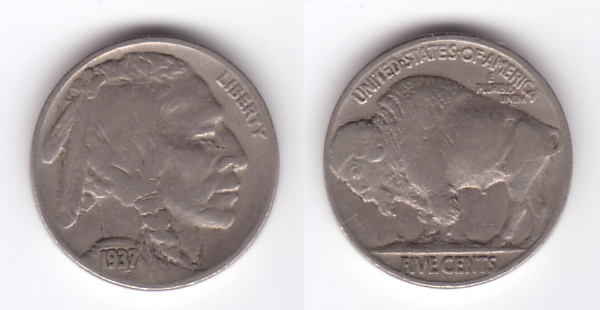
Public domain, via Wikimedia Commons
The buffalo lost a leg. Sometime during 1937 production at the Denver Mint, a die was over-polished to remove clash marks - and the polishing went too far, grinding away the bison's right front leg. The coins looked so strange that collectors started pulling them from circulation almost immediately. About 10,000 survive today. In Good condition, one runs about $452. In pristine mint state? Up to $121,750.
Quick Value Summary
| Item | 1937-D Three-Legged Buffalo Nickel |
| Year | 1937 |
| Category | Coins - U.S. Nickels |
| Composition | 75% copper, 25% nickel |
| Weight | 5.0 grams |
| Diameter | 21.2mm |
| Mint | Denver (D) |
| Estimated Survivors | ~10,000 |
| Condition Range | |
| Good (G-4) | ~$452 |
| Fine (F-12) | $600 – $985 |
| Very Fine (VF-20) | ~$817 |
| Extremely Fine (EF-40) | $1,083 – $24,995 |
| About Uncirculated (AU-55) | $2,000 – $5,000 |
| Uncirculated (MS-60) | ~$2,918 |
| Gem (MS-65) | $30,000 – $50,000 |
| Record Sale | $121,750 (MS-67, Heritage Auctions) |
| Rarity | Rare |
The Story
James Earle Fraser's Buffalo nickel - featuring a Native American chief on the obverse and an American bison on the reverse - ran from 1913 to 1938. It's one of the most beautiful and beloved designs in American coinage. And in 1937, the Denver Mint accidentally created its most famous variety.
During production, dies sometimes "clash" - they strike each other without a coin between them, leaving impression marks on the die surfaces. The standard fix was to polish the die to remove the clash marks. But at least one Denver Mint employee polished too aggressively.
The bison's right front leg was ground away. So was the "E PLURIBUS UNUM" motto above the buffalo, which became weak and mushy. The die went back into service and started stamping three-legged bison onto nickels.
The error was discovered quickly. Within months of reaching circulation, collectors recognized the three-legged variety and began pulling coins from change. This is actually why so many survivors are in higher circulated grades (EF to AU) - they didn't circulate long enough to get heavily worn before being saved.
The news spread through numismatic publications, and the 1937-D Three-Legged Buffalo became one of the most popular error coins in American history. It wasn't as rare as some errors, but the visual impact - a three-legged bison - was irresistible.
How to Identify It
The Missing Leg
The bison's right front leg is completely missing or nearly so. Where the leg should be, the field of the coin is smooth. The remaining legs are intact, and the bison appears to be standing on three legs.
Other Signs of the Over-Polished Die
"E PLURIBUS UNUM" above the bison is weak, mushy, or partially missing
The bison's belly may appear smoother than normal, showing effects of the die polishing
The ground line beneath the bison may show some distortion
What to Check
- Right front leg. It should be clearly absent. On genuine examples, the area where the leg would be is smooth field.
- Overall detail. The coin should have the softness associated with die polishing - particularly on the bison's body and the motto above.
- Mint mark. Small "D" on the reverse, below "FIVE CENTS." This variety only exists on Denver coins.
Common Confusions
Worn-down leg. A heavily circulated regular 1937-D nickel might have a faint front leg. The difference: on the three-legged variety, the leg is completely absent even on higher-grade specimens. On a worn normal nickel, you'll see traces of the leg under magnification.
Other Buffalo nickel errors. The 1936-D also has a "3½ legs" variety caused by similar die polishing, but it's less dramatic and less valuable.
Value by Condition
| Grade | Description | Value |
|---|---|---|
| G-4 (Good) | Heavy wear but missing leg clearly identifiable | ~$452 |
| F-12 (Fine) | Moderate wear, missing leg obvious | $600 – $985 |
| VF-20 (Very Fine) | Light wear on high points | ~$817 |
| EF-40 (Extremely Fine) | Slight wear, strong remaining detail | $1,083 – $24,995 |
| AU-55 (About Uncirculated) | Trace wear, most original surface intact | $2,000 – $5,000 |
| MS-60 (Mint State) | No wear, may have contact marks | ~$2,918 |
| MS-63 (Choice) | Minimal marks, good eye appeal | $10,000 – $20,000 |
| MS-65 (Gem) | Strong luster, minimal marks | $30,000 – $50,000 |
| MS-67 (Superb Gem) | Near-perfect | ~$121,750 |
Why EF-to-AU Grades Are Common
Remember - word got out fast. Collectors started saving these within months of release. Many were pulled from circulation after only light use, which is why a disproportionate number survive in the EF-40 to AU-58 range. Low-grade examples (Good to Fine) are actually scarcer than you'd expect because fewer circulated long enough to get really worn.
The XF Spread
The EF-40 range spans $1,083 to $24,995 - a huge gap. This reflects the difference between a typical EF coin and one with exceptional eye appeal, strong remaining detail, and original surfaces. At the higher end, you're looking at coins that just barely missed the AU grade.
Authentication & Fakes
What to Watch For
Altered genuine nickels. The most common fake: someone takes a regular 1937-D Buffalo nickel and removes the front leg through filing, acid, or tooling. Under magnification, you can often see:
Tool marks or an unnatural surface texture where the leg was removed
A slightly recessed area (from filing) rather than the smooth, flat field of the genuine variety
Remaining traces of the leg that the faker couldn't completely remove
The belly test. On a genuine three-legged variety, the bison's belly shows distinctive smoothness from the die polishing. This is very difficult to fake. If the belly looks normally struck but the leg is missing, be suspicious.
Cast counterfeits. Poor reproductions with incorrect weight (should be 5.0 grams) and mushy details.
Professional Grading
PCGS and NGC both recognize and certify the Three-Legged variety. For any example, professional certification is strongly recommended - it confirms both the variety and the grade, and adds significant value at resale.
Where to Sell
Circulated Examples ($452 – $5,000)
eBay - Strong market for certified Three-Legged Buffalo nickels
Heritage Auctions - Good for higher-grade circulated examples
Local coin shows - Multiple dealer interest in this popular variety
Uncirculated Examples ($2,900+)
Heritage Auctions - Best venue for high-grade examples
Stack's Bowers - Strong results for premium Buffalo nickels
Great Collections - Competitive online bidding
Always get it certified. The authentication issue is critical with this variety. Buyers want PCGS or NGC confirmation that the missing leg is from the die, not from someone's file. Certified examples sell for significantly more than raw coins.
Not sure what you have? Upload a photo to Curio Comp for a free AI estimate. Upload a photo →
Common Questions
How much is a 1937-D Three-Legged Buffalo nickel worth?
In Good condition, about $452. In Fine, $600–$985. Uncirculated examples start around $2,918 and Gem (MS-65) examples are worth $30,000–$50,000. The record sale is $121,750 for an MS-67.
How can I tell if my Buffalo nickel is the three-legged variety?
The bison's right front leg is completely absent - not worn, but genuinely missing. The area where the leg should be is smooth. Additionally, "E PLURIBUS UNUM" above the bison will be weak or mushy from the same die polishing that removed the leg.
Why is the front leg missing?
Die polishing gone wrong. When dies clash (strike without a coin between them), they get polished to remove the impression marks. A Denver Mint worker polished too aggressively and ground away the bison's front leg along with the clash marks.
Are there many fake three-legged nickels?
Yes. People commonly remove the front leg from regular 1937-D nickels by filing, acid, or tooling. Under magnification, fakes usually show tool marks or an unnatural surface where the leg was removed. The "belly test" - checking for the distinctive smoothness on the bison's belly from genuine die polishing - helps distinguish real from fake.
How many three-legged Buffalo nickels exist?
Numismatic experts estimate about 10,000 survive, with most in circulated grades between EF and AU. This makes it uncommon but not extremely rare - values are driven by strong collector demand for this visually dramatic error.
Related Items
Have This Item?
Our AI appraisal tool is coming soon. Upload photos, get instant identification and valuation.
Get Appraisal