1909-S VDB Lincoln Cent
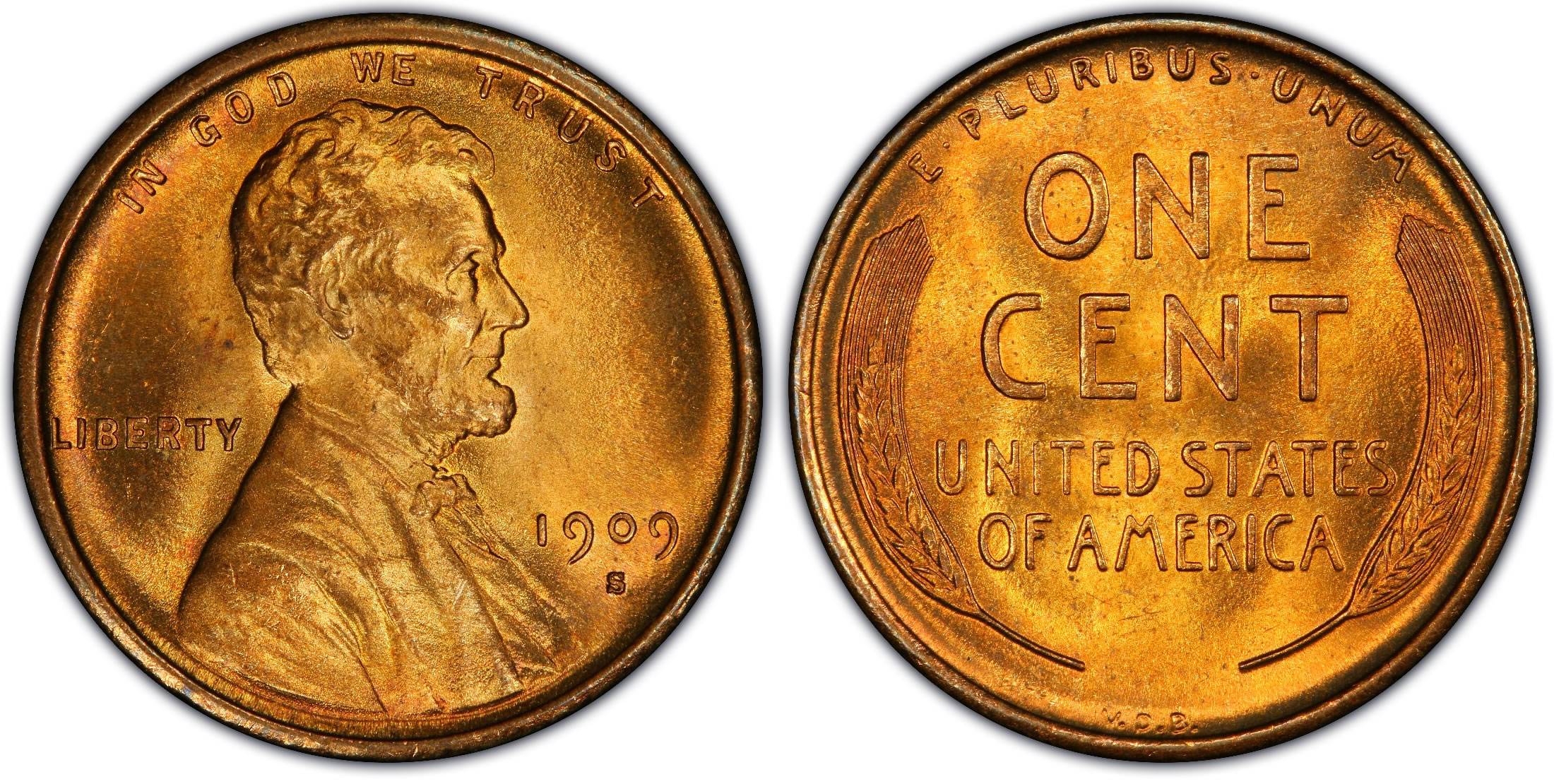
Wikimedia Commons, Public Domain - U.S. Government work
The 1909-S VDB Lincoln Cent is arguably the most famous coin in American numismatics. It is the coin that every collector knows, the coin that inspires people to start checking their pocket change, and the coin that sits at the intersection of political controversy, artistic ego, and pure scarcity. With a mintage of just 484,000 pieces, it is the key to the Lincoln cent series and one of the most recognized collectibles on Earth.
The Story Behind the Initials
In 1909, the United States Mint prepared to issue a new one-cent coin honoring the 100th anniversary of Abraham Lincoln's birth. The design was created by Victor David Brenner, a Lithuanian-born sculptor who had previously created a Lincoln plaque that impressed President Theodore Roosevelt.
Brenner's design featured Lincoln's portrait on the obverse, marking the first time a real person appeared on a regular-issue United States coin. The reverse displayed two stalks of wheat framing the denomination and motto "E PLURIBUS UNUM," creating the design that would be known as the "Wheat cent" for the next 49 years.
Brenner prominently placed his initials, "V.D.B.," on the reverse at the bottom of the coin, between the wheat stalks. When the coins entered circulation on August 2, 1909, public reaction was immediate and divided. Many people objected to what they saw as the designer's ego trip, placing his initials so prominently on public currency.
The outcry reached Mint Director Frank Leach, who ordered the initials removed after just a few days of production. The Philadelphia Mint had already struck approximately 27.9 million VDB cents, but the San Francisco Mint had produced only 484,000 before the order came through.
The result was an instant rarity. People who recognized the significance began pulling 1909-S VDB cents from circulation immediately. The coin was a recognized collectible from the day it was issued.
Why It Matters
The 1909-S VDB occupies a unique position in numismatics:
Instant collectible: Unlike most rare coins, which become valuable only decades after production, the 1909-S VDB was recognized as special from day one.
Gateway coin: More people have entered coin collecting because of the 1909-S VDB than perhaps any other single coin. Finding one in circulation was the Holy Grail for generations of young collectors checking pennies.
Historical marker: It represents the beginning of the Lincoln cent series, the longest-running coin design in U.S. history.
Artistic controversy: The VDB initial debate reflects the ongoing tension between artist recognition and public ownership of currency design.
Specifications
Designer: Victor David Brenner
Composition: 95% copper, 5% tin and zinc
Weight: 3.11 grams (48 grains)
Diameter: 19mm
Edge: Plain
Mint: San Francisco
Mint mark: S (located below the date on the obverse)
Mintage: 484,000
Designer's initials: V.D.B. (on reverse, at bottom between wheat stalks)
Value Guide by Grade
The 1909-S VDB is valuable in every grade, from well-worn to gem.
Circulated Grades
G-4: $700 to $900
VG-8: $900 to $1,100
F-12: $1,100 to $1,300
VF-20: $1,200 to $1,500
VF-35: $1,400 to $1,700
EF-40: $1,600 to $1,900
EF-45: $1,800 to $2,100
AU-50: $2,000 to $2,500
AU-55: $2,200 to $2,800
AU-58: $2,500 to $3,200
Mint State
MS-60 to MS-62: $3,000 to $4,500
MS-63 RB: $4,000 to $5,500
MS-63 RD: $5,000 to $7,000
MS-64 RB: $5,500 to $7,500
MS-64 RD: $7,000 to $10,000
MS-65 RB: $9,000 to $14,000
MS-65 RD: $15,000 to $25,000
MS-66 RD: $35,000 to $55,000
MS-67 RD: $100,000+
Color Designations: RD (Red) indicates the coin retains most of its original bright copper color. RB (Red-Brown) shows partial toning. BN (Brown) is fully toned. Red examples command the highest premiums.
Condition Assessment Guide
Obverse Check Points:
Lincoln's cheekbone (first area to show wear)
Hair detail above the ear
Date clarity and S mint mark sharpness
IN GOD WE TRUST lettering
Reverse Check Points:
V.D.B. initials (must be fully legible)
Wheat stalk detail and definition
ONE CENT denomination clarity
E PLURIBUS UNUM sharpness
Condition Grades:
Gem (MS-65+): Full strike, exceptional surfaces. RD examples show bright, original copper color. Minimal marks.
Choice (MS-63 to MS-64): Strong detail with scattered marks. Color may be RD, RB, or BN.
About Uncirculated (AU-50 to AU-58): Trace wear on Lincoln's cheekbone. Most original luster visible.
Extremely Fine (EF-40): Light wear on high points. Hair detail still clear.
Very Fine (VF-20 to VF-35): Moderate wear. Major features distinct.
Fine (F-12): Even wear. All lettering legible. VDB initials clear.
Good (G-4): Heavy wear. Date, mint mark, and VDB initials still readable.
Authentication: Essential
The 1909-S VDB's high value makes it heavily counterfeited. Common problems:
Added S mint mark: A genuine 1909 VDB (Philadelphia, no mint mark, worth $15-25 in VG) with a fabricated "S" added. This is by far the most common fraud.
Added VDB initials: A genuine 1909-S (no VDB, worth $80-120 in VG) with fabricated VDB initials added to the reverse.
Complete counterfeits: Cast copies from various sources.
Detection:
Examine the S mint mark under magnification. Added mint marks show different depth, incorrect letter shape, or tooling marks in surrounding fields.
Check VDB initials for consistency of depth and letter style with known genuine examples.
Verify weight (3.11 grams) and diameter (19mm).
Buy only PCGS or NGC certified examples for any significant expenditure.
Collecting Strategies
Lincoln Cent Collectors: The 1909-S VDB is the king of the series. No Lincoln cent collection is complete without it. Budget-conscious collectors start with a VG or Fine example.
Key Date Collectors: This coin belongs alongside the 1909-S (no VDB), 1914-D, 1922 (no D), 1931-S, and 1955 Doubled Die as the major Lincoln cent keys.
Type Set Collectors: The 1909-S VDB serves double duty as both a Lincoln Wheat cent type coin and a VDB variety. One coin, two boxes checked.
Budget Entry: A well-worn Good to Very Good example at $700 to $1,100 provides the real thing, genuine 1909-S mint mark, genuine VDB initials, and over a century of history. This is attainable for most collectors willing to save for it.
Investment Approach: The 1909-S VDB has appreciated consistently for over a century. It is one of the few coins that is genuinely liquid, meaning you can sell one quickly at fair market value, because demand never disappears.
The Coin That Starts Collections
The 1909-S VDB Lincoln Cent has introduced more people to coin collecting than any other single coin. The dream of finding one in a roll of pennies, while increasingly unlikely, still motivates new collectors to examine every cent that passes through their hands. That is a remarkable power for a small copper disc that was controversial from the moment it was minted.
For experienced collectors, owning a 1909-S VDB is a milestone. For new collectors, it is a goal. For everyone, it is a reminder that the most compelling collectibles are the ones that tell a story worth remembering.
Related Items
Have This Item?
Our AI appraisal tool is coming soon. Upload photos, get instant identification and valuation.
Get Appraisal