The 1878 Cyprus 1/2 Piastre (First Issue, Plate 15): Britain's First Stamp for the Mediterranean Jewel
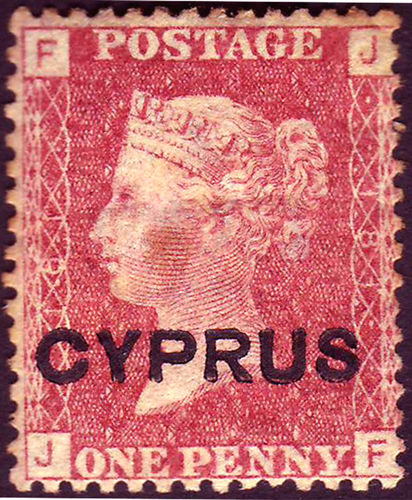
Philafrenzy, Public Domain, via Wikimedia Commons
When the British Empire took administrative control of Cyprus from the Ottoman Empire on July 11, 1878, the island needed a postal system, and postal systems needed stamps. What followed was one of the most fascinating chapters in philatelic history: a series of improvised overprints on existing British stamps that created some of the most collectible items in Mediterranean philately. The 1878 Cyprus 1/2 Piastre is among the earliest of these issues, and examples from specific printing plates (including the elusive Plate 15) are prized by specialists who understand how plate numbers transform an ordinary overprint into a genuine rarity.
Historical Context: Cyprus Under the Union Jack
The British acquisition of Cyprus was a product of great power politics. At the Congress of Berlin in June 1878, Britain struck a deal with the Ottoman Empire: in exchange for British support against Russian expansion, the Ottomans would lease Cyprus to Britain. The arrangement was formalized on July 1, 1878, and British troops arrived on the island ten days later.
The island's existing Ottoman postal infrastructure was rudimentary. Britain needed to establish a modern postal service quickly, both for administrative communication and to project the image of orderly governance. The first British post offices on Cyprus opened in 1878, initially using standard British stamps that can only be identified as having been used in Cyprus by their distinctive numbered cancellation marks (the "942" and "981" obliterators assigned to Larnaca and Limassol respectively).
This arrangement was always temporary. By 1880, the colonial administration began overprinting British stamps with the word "CYPRUS" to create dedicated postal issues for the island. The 1/2 Piastre denomination was created by surcharging the existing British Penny Red stamp, converting its value from British currency to the local Ottoman-derived piastre system that remained in use on the island.
The Penny Red Connection
The base stamp used for the Cyprus 1/2 Piastre overprint was the British Penny Red, one of the most widely produced stamps in postal history. The Penny Red had been in continuous production since 1841 and by the late 1870s existed in hundreds of plate varieties. Each printing plate was assigned a number, and that number was incorporated into the stamp design as tiny numerals visible in the lower corners of the stamp.
When the British Post Office supplied stamps to Cyprus for overprinting, they drew from their existing stocks of Penny Reds. The sheets sent to Cyprus came from many different plates, selected more or less at random from available inventory. This randomness is what makes plate number collecting so fascinating for Cyprus specialists: some plate numbers appear frequently because large quantities from those plates happened to be in stock, while others are extremely scarce because only a small number of sheets from those plates were included in the Cyprus shipment.
The plate numbers confirmed for the Cyprus Penny Red overprints include 174, 181, 184, 193, 196, 201, 205, 208, 215, 216, 217, 218, and 220. Plate 15, however, belongs to an earlier generation of Penny Red plates, and Cyprus examples from this plate are among the scarcest of all varieties. The plate number appears as tiny "1" and "5" digits in the lower corners of the stamp, requiring magnification to identify with certainty.
The Overprint
The Cyprus overprint was applied in London before the stamps were shipped to the island. The word "CYPRUS" was printed across the face of the stamp in sans-serif capital letters, typically in black ink. For the 1/2 Piastre denomination, an additional surcharge was applied showing the new value.
The overprinting process was not perfectly controlled, and several varieties exist that command premiums among collectors:
Inverted Overprint: Rare examples exist where the "CYPRUS" overprint was applied upside down relative to the stamp design. These are among the most valuable varieties.
Double Overprint: Stamps that passed through the overprinting press twice, resulting in a shadow or doubled appearance of the text.
Shifted Overprint: Examples where the overprint is significantly off-center, sometimes barely touching the stamp surface.
Missing Overprint: In sheets where the overprinting press malfunctioned, individual stamps or portions of sheets may have escaped overprinting entirely.
Each of these varieties adds value, with inverted overprints commanding the highest premiums.
Value Guide by Condition and Plate
Values for Cyprus 1/2 Piastre stamps vary dramatically based on plate number, condition, and whether the stamp is mint (unused) or used (cancelled). Here is a general guide:
| Plate/Variety | Used (Good) | Used (Fine) | Mint (OG) | Mint (Fine OG) |
|---|---|---|---|---|
| Common plates (201, 205, 208, 216, 217, 218) | $15 - $30 | $40 - $80 | $60 - $120 | $150 - $300 |
| Scarcer plates (174, 184, 193, 196) | $30 - $60 | $80 - $180 | $120 - $250 | $300 - $600 |
| Rare plates (including Plate 15) | $100 - $250 | $300 - $700 | $500 - $1,200 | $1,500 - $4,000+ |
| Inverted overprint (any plate) | $500 - $1,000 | $1,500 - $3,500 | $2,000 - $5,000 | $5,000 - $12,000+ |
Values assume stamps with standard cancellations. Stamps with identifiable Cyprus town cancellations (Larnaca, Limassol, Nicosia, Paphos, Famagusta, or Kyrenia) can command additional premiums, particularly from the scarcer post offices.
What to Look For: Authentication and Condition
The Cyprus overprints present several authentication challenges that collectors should understand:
Plate Number Identification: The tiny plate numerals in the lower corners of Penny Red stamps require magnification (10x minimum, 20x preferred) to read accurately. The numerals can be worn, partially obscured by the overprint, or affected by heavy cancellation. Misidentifying a plate number is one of the most common errors among beginning collectors of this issue.
Overprint Authenticity: Forged overprints on genuine Penny Red stamps are a known problem. Authentic Cyprus overprints have specific characteristics: consistent ink density, precise letter spacing, and a slight impression in the paper from the printing press. Forged overprints often appear too crisp, too dark, or too uniformly applied. Under magnification, authentic overprint ink should show the slightly uneven absorption pattern typical of letterpress printing on coated stamp paper.
Gum Condition: For mint examples, the original gum (OG) should be consistent with late 19th-century British stamp production: slightly yellowish, smooth, and evenly applied. Regummed stamps (where original gum has been removed and new gum applied) are relatively common in this market and should be priced significantly below genuinely original gum examples.
Centering: Penny Red stamps were cut from sheets using perforating machines that were not always precisely aligned. Well-centered examples (where the stamp design is evenly positioned within the perforations) are worth significantly more than off-center copies. Perfectly centered examples of Victorian-era stamps are genuinely rare.
Cancel Quality: For used examples, the type and heaviness of the cancellation matters enormously. Light, partial cancellations that leave most of the design visible are preferred. Heavy cancellations that obscure the stamp face reduce value, though they may increase interest if the cancel itself is identifiable as a rare Cyprus postal marking.
Collecting Strategies
The Cyprus Penny Red overprints lend themselves to several collecting approaches:
Plate Number Collection: Assembling one example from each known plate number is the classic specialist challenge. Common plates can be acquired for modest sums, but the scarcer plates may require years of patient searching. A complete plate set, even in mixed condition, represents a significant philatelic achievement.
Cancellation Study: Collecting examples with identifiable Cyprus town cancellations allows you to reconstruct the early postal geography of British Cyprus. The six original post offices each used distinctive date stamps that can be identified by specialists.
Variety Collection: Focusing on overprint varieties (inverted, doubled, shifted) across all plate numbers creates a collection that highlights the printing history of the overprints themselves.
Cover Collection: Stamps on original envelopes (covers) are worth substantially more than loose stamps, as they preserve the complete postal history: origin, destination, route, and rate. Cyprus covers from the 1878-1881 period are genuinely rare and can command prices many times higher than the stamps alone.
Market Outlook
The market for Victorian-era British colonial stamps has been relatively stable compared to some other collecting areas, sustained by a dedicated community of specialists who value the combination of historical significance, visual appeal, and intellectual challenge that plate number philately offers.
The Cyprus overprints benefit from interest on multiple fronts. British colonial collectors seek them as part of the broader Empire collection. Cyprus specialists focus on the detailed plate and variety study. And general Victorian stamp collectors appreciate them as examples of the creative solutions that colonial postal authorities devised to meet immediate needs.
Plate 15 examples, when they appear on the market, typically generate strong bidding from multiple collectors. The rarity is well established, the authentication challenges keep casual speculators at bay, and the historical story (a random batch of Penny Red sheets from a specific printing plate, shipped to a newly acquired Mediterranean island, overprinted in London, and surviving 145+ years of handling) gives each example a narrative that transcends its modest physical dimensions.
For new collectors entering this area, the common plate numbers offer an affordable entry point. A used example from Plate 201 or 218 in good condition can be acquired for under $50, giving you a genuine piece of 1880s British colonial history. From there, the plate number rabbit hole awaits, and many collectors who started with a single inexpensive Cyprus overprint have found themselves decades later still pursuing that one elusive plate.
Explore More: Browse all Stamps →
Related Items
Have This Item?
Our AI appraisal tool is coming soon. Upload photos, get instant identification and valuation.
Get Appraisal