1967 Topps #150 Mickey Mantle Value & Price Guide
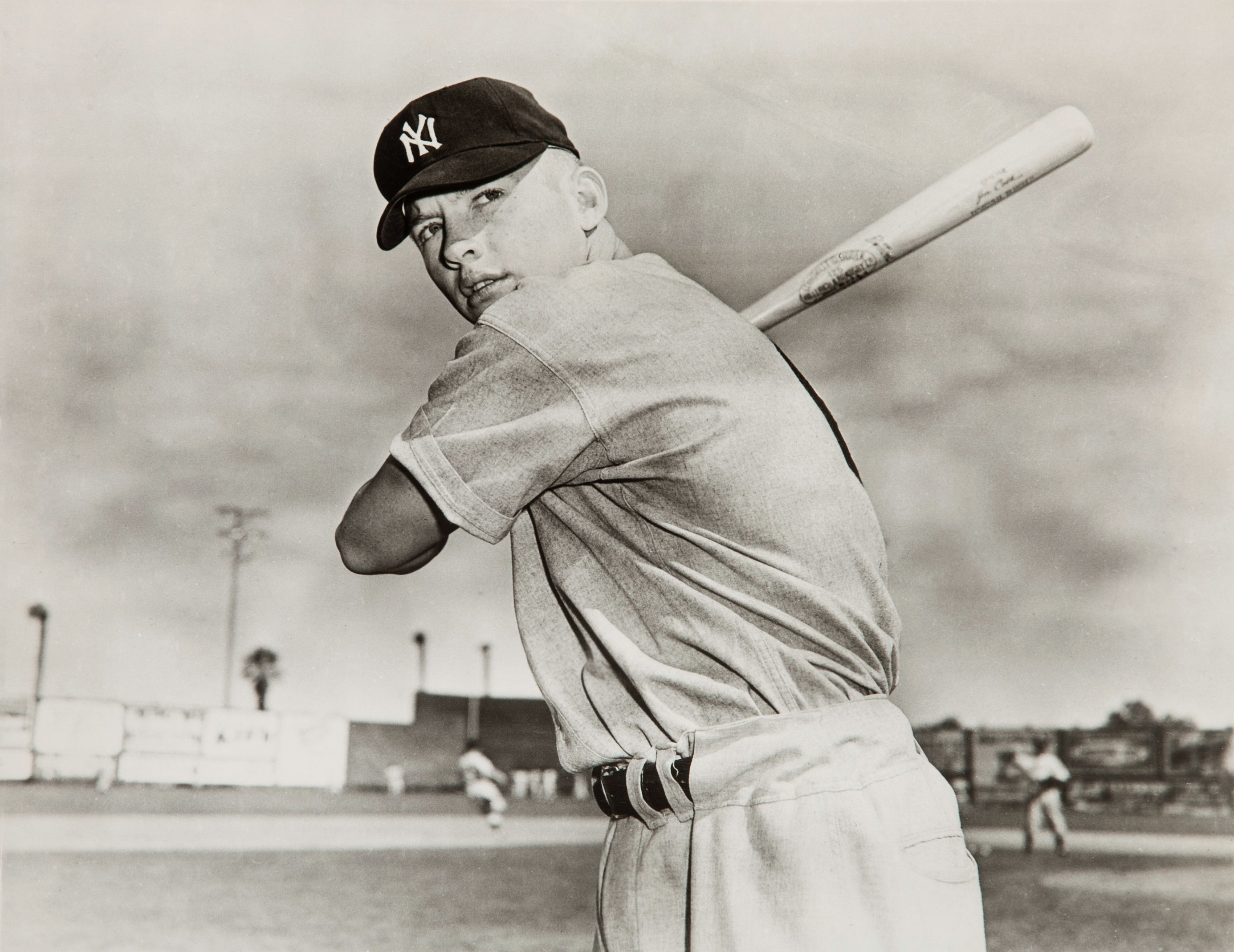
New York Yankees / Heritage Auctions, Public Domain, via Wikimedia Commons
The 1967 Topps #150 Mickey Mantle holds a bittersweet position in the hobby. This card captures The Mick in the twilight of a career that redefined what a baseball player could be. At 35, Mantle was battling injuries that would force his retirement two years later, but the card itself radiates the same star power that made him the most collected player in baseball card history.
Topps placed Mantle at card #150 in the 1967 set, a prominent position in the middle of the checklist. The card features a clean portrait shot of Mantle in his iconic pinstripes, with the distinctive 1967 Topps design framing the image in a simple, elegant layout that lets the subject speak for itself.
Historical Significance
The 1967 season was Mantle's 16th with the Yankees and one of his most physically challenging. He hit .245 with 22 home runs, respectable numbers that masked the daily pain of playing on knees held together by tape, willpower, and cortisone shots. The card represents one of the final Topps issues during Mantle's playing career, making it a key acquisition for anyone building a Mantle type collection.
The 1967 Topps set itself is notable for its clean, understated design. Unlike the busier layouts of surrounding years, the 1967 cards use a simple facsimile autograph across the photo, clean borders, and a color-coded position indicator. This design ages well and gives the set a timeless quality that collectors appreciate.
Mantle cards from any year carry a premium, but the late-career issues occupy an interesting space. They lack the raw dollar value of the 1952 Topps rookie (#311) but offer genuine historical significance at a fraction of the price. For many collectors, the 1967 represents the accessible entry point into high-quality Mantle collecting.
Current Market Values
The 1967 Topps Mantle trades actively across all major platforms, with enough sales volume to establish reliable pricing benchmarks.
PSA Graded Values (2026)
| Grade | Condition | Approximate Value |
|---|---|---|
| PSA 9 | Mint | $10,000 - $15,000 |
| PSA 8 | NM-MT | $2,500 - $3,500 |
| PSA 7 | Near Mint | $800 - $1,200 |
| PSA 6 | EX-MT | $400 - $600 |
| PSA 5 | Excellent | $250 - $350 |
| PSA 4 | VG-EX | $150 - $225 |
| PSA 3 | Very Good | $250 - $310 |
| SGC 6 | EX-NM | $550 - $700 |
| Raw Ungraded | Varies | $75 - $300 |
SGC-graded examples typically trade at a 10-20% discount to their PSA equivalents, though this gap has narrowed in recent years as SGC has gained broader market acceptance. Recent sales data from March 2026 confirms PSA 3 examples selling around $280-$310 and SGC 6 examples at $550-$650.
Condition Guide
The 1967 Topps set presents specific grading challenges that affect Mantle cards particularly.
Centering: The 1967 Topps cards were printed on sheets that produced inconsistent cutting. Left-to-right centering is the most common issue. Perfectly centered examples (within 55/45 on both axes) are scarce and command premiums.
Print Quality: The white borders on 1967 Topps cards show every imperfection. Fish-eye print dots, roller marks, and color registration shifts appear regularly. Mantle cards with clean, sharp printing bring premiums over examples with visible print issues.
Surface Wear: The glossy finish on 1967 Topps cards is prone to creasing and surface abrasion. Tilt the card under strong light to check for surface wrinkles that may not be visible in flat lighting.
Corners: The sharp corners on these cards are vulnerable to rounding. Even a single soft corner typically drops a card from PSA 8 to PSA 7 range.
Condition Grades
| Grade | What to Expect |
|---|---|
| Mint (9) | Exceptional centering, crisp corners, vibrant color, minimal to zero print issues |
| NM-MT (8) | Very slight centering variance, one minor flaw |
| Near Mint (7) | Moderate centering issues or two minor flaws |
| EX-MT (6) | Noticeable centering or corner wear, minor surface issue |
| Very Good (3-4) | Obvious wear, creasing possible, still structurally sound |
Authentication
Counterfeit 1967 Topps Mantle cards exist but are less common than fakes of the 1952 issue. The primary concerns are trimming (cutting down the borders to improve centering or remove edge wear) and re-coloring (touching up worn edges with paint or markers).
Check the card dimensions with calipers. A genuine 1967 Topps card measures approximately 2.5 x 3.5 inches. Trimmed cards will measure slightly smaller on one or more dimensions.
Examine the edges under magnification. Natural edge wear shows gradual fiber separation. Trimmed edges appear unnaturally clean and sharp, sometimes with visible cut marks.
The card stock should have a consistent thickness and color throughout. Hold the card up to strong backlighting to check for repairs, patches, or areas where material has been added.
Market Trends
Mantle cards operate in their own ecosystem within the sports card market. As arguably the most popular player in the hobby, Mantle material holds value through market downturns better than most.
The 1967 Topps #150 has appreciated steadily over the past decade, with the pandemic-era boom pushing values to all-time highs in 2021. The subsequent correction was milder for Mantle material than for the broader market, with PSA 8 examples declining roughly 25% from peak before stabilizing.
Demographics strongly favor continued appreciation. The generation that watched Mantle or collected his cards continues to be a passionate buyer base, while younger collectors drawn to the hobby through online content increasingly target iconic vintage material.
PSA population reports show approximately 2,200 total graded examples, with the largest concentration at PSA 6 and PSA 7. PSA 9 examples are genuinely scarce, with fewer than 50 total graded, supporting the five-figure pricing at that level.
Investment Outlook
The 1967 Topps Mantle represents what the hobby calls a "gateway vintage card" -- significant enough to be meaningful, priced within reach of serious collectors, and tied to a player whose legacy only grows with time.
For collectors looking to build a Mantle portfolio, the 1967 offers strong value relative to earlier issues. A PSA 7 at $800-$1,200 delivers genuine quality and display appeal, while PSA 5-6 examples in the $250-$600 range provide an affordable way to own authenticated Mantle material.
The card's long-term trajectory likely mirrors Mantle's broader collectibility: steady appreciation punctuated by occasional spikes tied to milestone anniversaries, market cycles, or cultural moments that bring new attention to The Mick's legacy.
Buying and Selling
eBay dominates the secondary market for 1967 Topps Mantle, with active listings typically numbering in the hundreds. Heritage Auctions, PWCC, and Goldin handle higher-grade examples, often achieving premium prices through competitive bidding.
When buying raw examples, scrutinize photos carefully and ask for additional images if the listing photos are insufficient. Pay particular attention to centering (the most common issue) and corner sharpness.
For sellers, professional grading through PSA or SGC typically adds significant value, particularly for cards that appear to be PSA 7 or above. The grading cost ($30-$50 at current turnaround tiers) is easily recouped on a Mantle card.
Be cautious of "buy it now" listings priced significantly below recent sales. While deals exist, dramatically underpriced Mantle cards sometimes indicate problems not visible in photos or authentication concerns.
Collecting Context
Mantle appears across seven primary Topps issues from 1952 to 1968, plus a handful of specialty issues and multi-player cards. The 1967 sits near the end of this run but before the 1968 issue, which holds the distinction of being Mantle's final Topps card.
Many collectors pursue a complete Mantle Topps run, and the 1967 is typically one of the more accessible acquisitions in that project. It lacks the extreme pricing of the 1952, 1953, and 1956 issues while still delivering the satisfaction of owning a genuine vintage Mantle card in a classic design.
Related Items
Have This Item?
Our AI appraisal tool is coming soon. Upload photos, get instant identification and valuation.
Get Appraisal