1971 Topps Pete Rose #100 Value & Price Guide
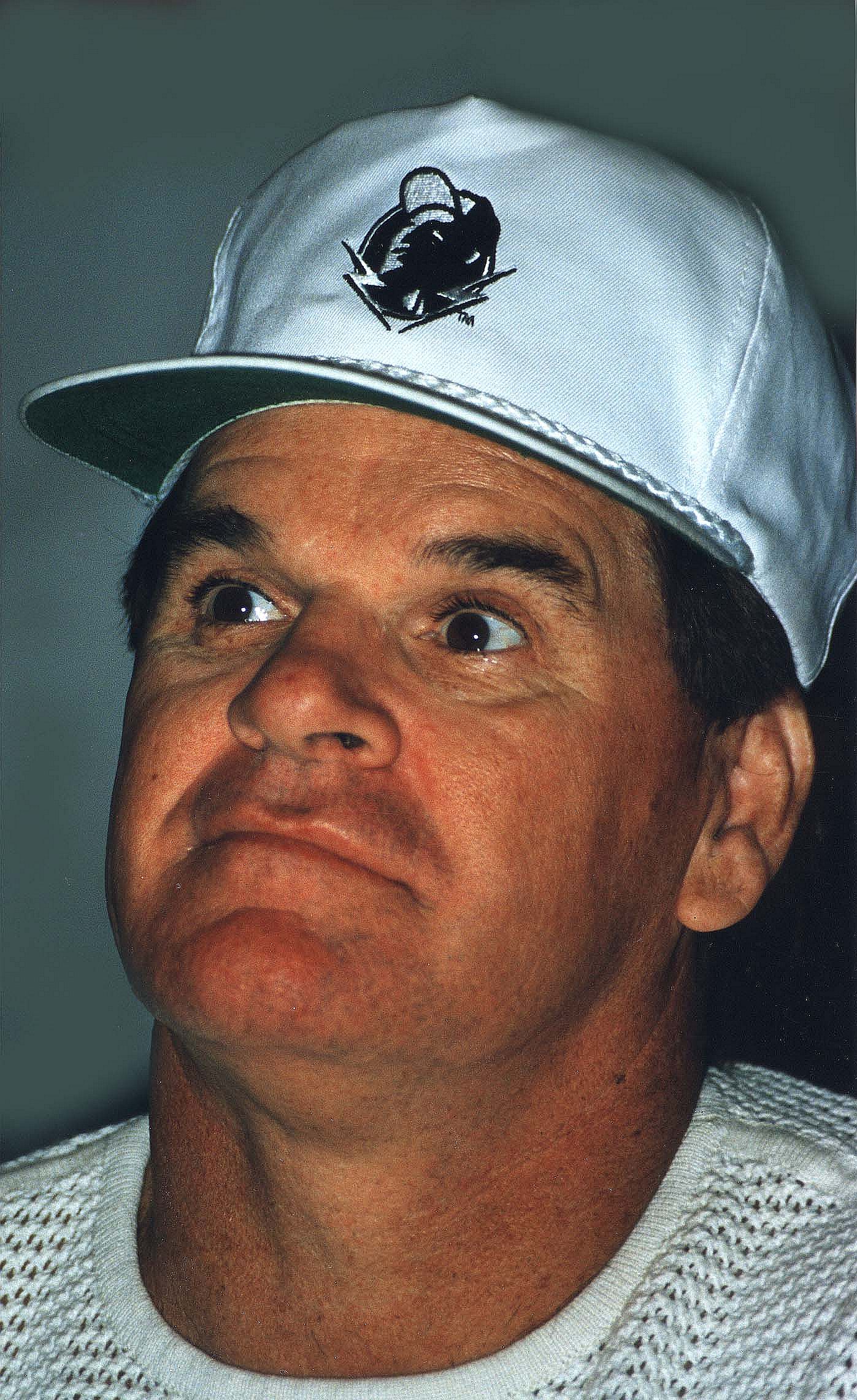
Photo by John Mathew Smith & www.celebrity-photos.com, CC BY-SA 2.0, via Wikimedia Commons
The 1971 Topps set is one of the hardest vintage baseball sets to find in high grade, and it has nothing to do with rarity. It has everything to do with borders. Topps chose jet-black borders for the entire 752-card set, and black borders show every nick, dent, and fingerprint like a dark suit shows lint. Pete Rose's card #100 sits right in the middle of this condition nightmare, making clean copies genuinely scarce and surprisingly valuable.
Pete Rose finished his career with 4,256 hits, more than any player in major league history. He won three batting titles, three World Series rings, and the 1973 National League MVP award. Then he was banned from baseball for life in 1989 for gambling on games he managed. He passed away on September 30, 2024, at age 83, still on the ineligible list, still holding the all-time hits record.
Quick Value Summary
Item: 1971 Topps Pete Rose #100
Year: 1971
Category: Sports Cards (Baseball)
Condition Range:
- PSA 1-2 (Poor to Good): $10 - $20
- PSA 3 (Very Good): $25 - $35
- PSA 4 (Very Good-Excellent): $40 - $65
- PSA 5 (Excellent): $70 - $100
- PSA 6 (Excellent-Mint): $150 - $225
- PSA 7 (Near Mint): $350 - $450
- PSA 8 (Near Mint-Mint): $1,500 - $3,000
- PSA 9 (Mint): $10,000 - $18,000
Record Sale: PSA 10 Gem Mint copies are virtually non-existent; a PSA 9 sold for over $15,000 in 2023
Rarity: Common in low grades, very rare in PSA 8+
The Story
By 1971, Pete Rose was already one of the best hitters in baseball. He had won the Rookie of the Year award in 1963, earned the nickname "Charlie Hustle" for sprinting to first base on walks, and collected over 1,500 hits by the time this card was printed. The photo on card #100 shows Rose in his Cincinnati Reds uniform, set against the distinctive black border that defines the entire 1971 Topps set.
Topps had experimented with colored borders before. The 1962 set used wood-grain frames. The 1968 set had a simple burlap texture. But 1971 was the first time Topps went fully black. The visual effect was striking. The cards looked sharp and modern on the shelf. They just didn't stay looking sharp for long. Black borders chip when you riffle through them. They show white along every edge that gets bumped. They fingerprint if you hold them too firmly. Kids in 1971 didn't know they were handling future investments. They shuffled them, rubber-banded them, and stuck them in bicycle spokes.
That's why a 1971 Topps card in PSA 8 or better is a fundamentally different animal from the same card in PSA 5. It's not just condition. It's survival.
How to Identify It
Card Number: #100, printed on the back
Front Design: Full-color photo of Pete Rose in a Cincinnati Reds uniform, surrounded by a solid black border. His name appears in a colored band at the bottom, along with "REDS" and his position
Back Design: Orange and brown color scheme with statistics through the 1970 season. Includes a short biographical write-up and cartoon
Set Size: Part of the 752-card 1971 Topps set (the largest Topps baseball set to that point)
Key Visual Check: The black borders should be even on all four sides. Centering issues are extremely common in this set
Common Confusions:
Do not confuse with the 1971 Topps Pete Rose #101 (a "Coins" insert). The base card is #100
The 1971 set also includes Rose in the league leader subset cards
Some cards were issued in later printings with slightly different color saturation
Value by Condition
PSA 3 (Very Good) - $25 to $35 A PSA 3 shows significant wear. Corners are rounded, edges show chipping on those black borders, and the surface may have creases or staining. This is an affordable entry point for collectors who want a graded Rose card from this tough set. Average sale prices have held steady around $28.
PSA 4 (Very Good-Excellent) - $40 to $65 Minor creases may still be present, but the card presents better overall. Black borders show moderate chipping. Recent sales on eBay have ranged from $40 to $58, with well-centered examples commanding the higher end.
PSA 5 (Excellent) - $70 to $100 The card should be free of major creases. Some border wear is acceptable. PSA 5 copies represent solid mid-grade examples. Recent average around $80.
PSA 6 (Excellent-Mint) - $150 to $225 This is where values start climbing. A PSA 6 shows only slight wear on corners and edges. With black borders, even minor chipping becomes visible. A PSA 6 sold for $222 on March 1, 2026. The 14-day average sits at $222.
PSA 7 (Near Mint) - $350 to $450 A PSA 7 is a genuinely nice card. Borders are mostly clean with only the slightest imperfections. Centering must be reasonable. The last sale was $380, and the running average is around $415. This grade represents the sweet spot between condition and affordability for serious collectors.
PSA 8 (Near Mint-Mint) - $1,500 to $3,000 Here's where the black border factor kicks in hard. Getting a 50-year-old black-bordered card to grade PSA 8 requires near-perfect edge preservation. Population is relatively thin at this grade. These cards rarely surface at auction, and when they do, they sell quickly.
PSA 9 (Mint) - $10,000 to $18,000 PSA 9 copies are genuinely rare for any 1971 Topps card, let alone a star like Rose. The card must have virtually no border chipping, perfect corners, and strong centering. These are the cards that collectors build want lists around for years.
PSA Population and Grading Notes
The PSA population for the 1971 Topps Pete Rose #100 stands at over 3,389 graded copies as of early 2026. Total graded copies across all services (PSA, SGC, BGS, and others) exceed 4,700. The vast majority cluster in the PSA 4 to PSA 7 range. PSA 8 and above represent a small fraction of the total population.
SGC-graded copies tend to sell at a modest discount to PSA equivalents. A SGC 60 (roughly equivalent to PSA 5) recently averaged around $57.
Errors and Variations
The 1971 Topps Pete Rose #100 does not have widely recognized error variations. However, collectors should be aware of:
Centering Variants: Off-center cards are extremely common in 1971 Topps. A well-centered example can command a premium even within the same grade
Print Quality Differences: Some copies show darker or lighter black borders depending on the print run and position on the sheet
OPC (O-Pee-Chee) Version: The Canadian O-Pee-Chee version of this card exists and is scarcer than the Topps version, though it trades at similar or slightly lower prices due to less collector demand
Authentication and Fakes
Outright fakes of the 1971 Topps Pete Rose #100 are uncommon. The card's moderate value in lower grades doesn't justify the cost of sophisticated counterfeiting. However, collectors should watch for:
Trimmed Cards: The most common manipulation. Sellers trim chipped black borders to make them appear cleaner. A trimmed card will measure slightly smaller than the standard 2.5" x 3.5". PSA and SGC catch most trimming during the grading process
Re-colored Borders: Some sellers touch up chipped black borders with marker or paint. This is detectable under magnification or UV light
Altered Corners: Corners can be reshaped. Look for a matte texture difference between the corner and the rest of the card surface
Professional grading is recommended for any copy you believe grades PSA 6 or higher. At that price point, the $30 to $50 grading fee is easily justified by the value confirmation.
Where to Sell
The 1971 Topps Pete Rose #100 is a bread-and-butter card for the vintage baseball market. It moves at every price level:
eBay: The most active marketplace for this card. PSA-graded copies sell consistently, with strong comparable data available. eBay's 13.25% final value fee is the main cost. Best for cards in PSA 3 through PSA 7
PWCC / Fanatics Collect: For PSA 8 and above, consigning through a major auction platform can net higher final prices due to a larger pool of serious buyers. Seller fees typically run 10% to 15%
Local Card Shows: Raw or lower-graded copies sell well at shows, especially after Rose's passing renewed collector interest
Heritage Auctions: For PSA 9 or better, Heritage reaches the deepest-pocketed vintage collectors. Buyer's premium is 20%, which the buyer pays, but it does affect the effective price sellers receive
Estimated Selling Costs:
PSA grading (if ungraded): $30 to $50 for cards valued under $500
eBay fees: about 13% of final sale price
Insured shipping: $5 to $15 for standard graded card shipping
Not sure about the condition of yours? Upload a photo to Curio Comp for a quick AI-powered estimate.
Explore More
Pete Rose's 1971 Topps card captures baseball's all-time Hit King at the height of his prime, framed by the most condition-sensitive borders in the hobby. Whether you're buying, selling, or just curious, the black borders tell the story: survival is value. Browse all Sports Cards items →
Related Items
Have This Item?
Our AI appraisal tool is coming soon. Upload photos, get instant identification and valuation.
Get Appraisal