The Rolling Stones - Sticky Fingers (1971 UK First Pressing with Working Zipper)
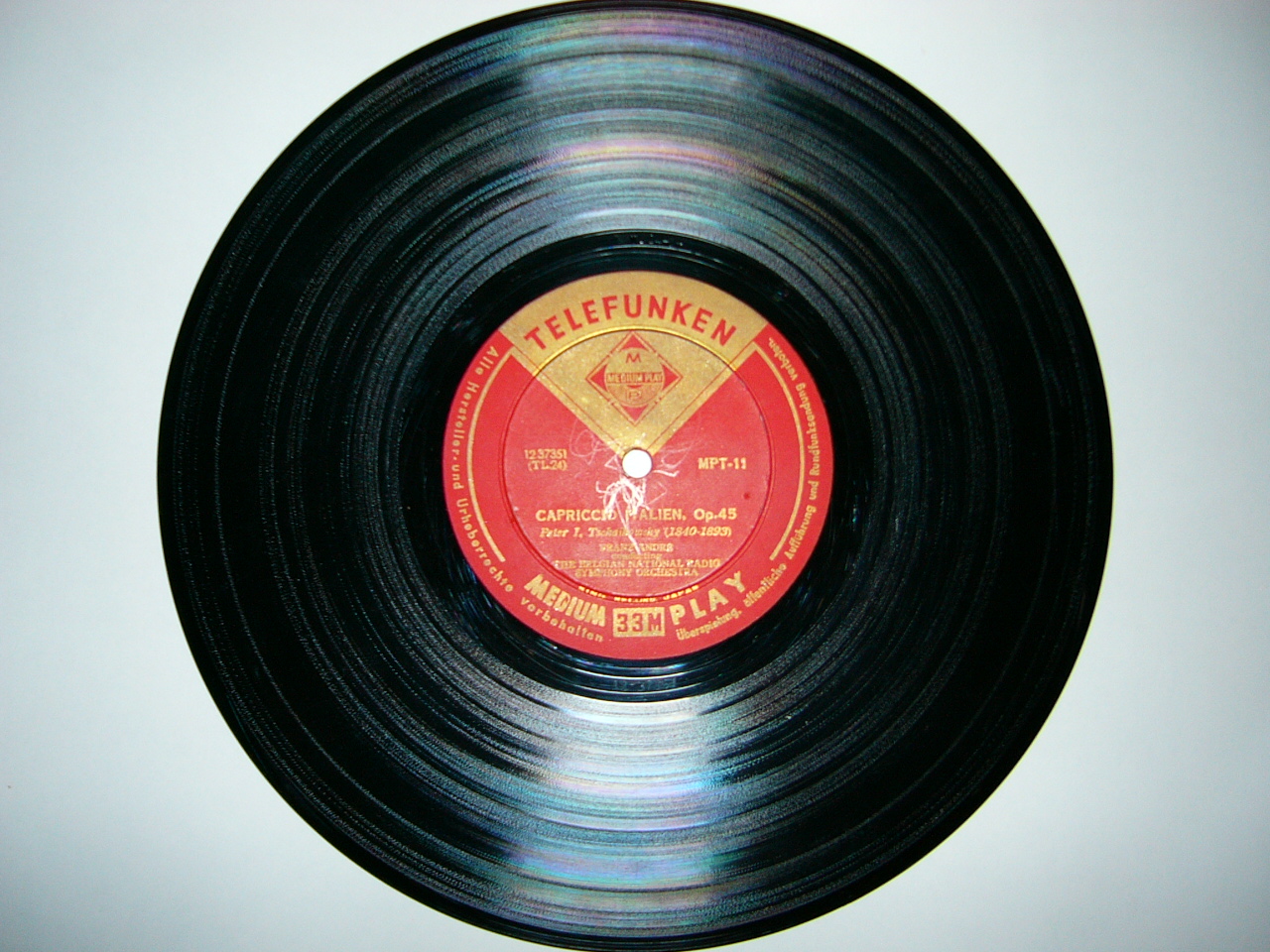
Vinyl LP record. Photo by 能無しさん, CC BY-SA 3.0, via Wikimedia Commons.
Few albums in rock history arrive with as much swagger as Sticky Fingers. Released on April 23, 1971, the Rolling Stones' ninth British studio album didn't just deliver some of the band's greatest music. It came packaged in one of the most audacious album covers ever pressed onto cardboard. The UK first pressing, with its fully functional metal zipper designed by Andy Warhol, stands as one of vinyl collecting's most celebrated holy grails.
The Album That Launched a Record Label
Sticky Fingers marked a pivotal moment for the Rolling Stones. It was the first release on Rolling Stones Records (catalog number COC 59100), the band's own imprint distributed in the UK by Rolling Stones Records and Kinney/Atlantic in the US. No longer beholden to Decca or London Records, the Stones had full creative control, and they used it.
The sessions drew from recordings made between March 1969 and October 1970 at Muscle Shoals Sound Studio, Olympic Studios in London, and Record Plant in Los Angeles. Produced by Jimmy Miller, the album featured a new lineup with Mick Taylor on lead guitar, replacing the departed Brian Jones. Taylor's fluid, jazz-inflected playing transformed the band's sound.
The tracklist reads like a greatest hits collection on its own: "Brown Sugar," "Wild Horses," "Can't You Hear Me Knocking," "Bitch," "Dead Flowers," and "Sister Morphine." Rolling Stone magazine later called it "the Stones' most downbeat, druggy album," a record steeped in Southern blues, country, and the kind of decadent fatalism that defined early 1970s rock.
Andy Warhol and the Most Dangerous Album Cover in History
Mick Jagger commissioned Andy Warhol to design the cover, and Warhol delivered something that would have delighted and horrified in equal measure. The front features a close-up photograph of denim-clad hips, with a real functional zipper. Unzip it, and you reveal a second image beneath.
This wasn't just a gimmick. On UK first pressings, the zipper is fully operational, attached to an interior panel. Early copies featured a zipper that, when zipped and unzipped repeatedly, could scratch the vinyl surface inside. This is why truly pristine first pressings with both intact zipper hardware and unscratched vinyl are so rare.
The Warhol-designed crotch photograph was taken by photographer Billy Name. The original cover also included a working zip that revealed a second photo (underwear) beneath. The inner sleeve on UK first pressings features a black-and-white band photograph on one side and lyrics and credits on the reverse, printed by Richard Davis Ltd in England.
Identifying a Genuine UK First Pressing
The original UK first pressing has several key identifiers that separate it from the many reissues and later pressings that followed.
The matrix/runout information is the most reliable identifier. Look for:
Side A: COC 59100 A (with pressing matrix variants)
Side B: COC 59100 B (with corresponding matrix)
The phrase "T.M.L. ROLLING STONES RECORDS" should appear etched in the runout groove
No "A Promotone N.V. RECORD" inscription on the labels (Promotone was founded in September 1971, after the April release)
The zipper on front cover on the very earliest UK pressings is completely blank with two indented lines, without any manufacturer's markings. Later pressings and reissues often feature different zipper hardware or a non-functional zipper.
The label should be the early Rolling Stones Records design. First pressings do not carry the Promotone credit because that company didn't exist at the time of the original release.
The inner sleeve printing credit should reference Richard Davis Ltd, England.
The record itself should have deep, quiet grooves typical of early 1970s British pressings, with the warm, punchy sound that UK audiophiles have treasured for decades.
What Condition Means for Value
For this pressing, condition dramatically affects value. The zipper presents a unique challenge: a zipper that works perfectly without scratching the record is a premium feature, but the mechanical wear of use inevitably took its toll on many copies.
| Condition | Description | Estimated Value |
|---|---|---|
| Mint (M) | Unplayed, zipper unused, original inner | $400 - $800+ |
| Near Mint (NM/M-) | Minimal play, zipper intact and working | $200 - $400 |
| Very Good Plus (VG+) | Light play, minor sleeve wear, zipper functional | $100 - $200 |
| Very Good (VG) | Noticeable play, some sleeve wear | $50 - $100 |
| Good (G/VG-) | Heavy wear, possible zipper issues | $25 - $50 |
Copies with the original inner sleeve intact command a premium. Those where the zipper has been removed (some owners did this to protect their records) are generally worth less than copies where the hardware remains, even if non-functional.
The Sonic Experience
Beyond its collectible status, the UK first pressing of Sticky Fingers is regarded as sonically superior to many later pressings. The lacquers were cut by a skilled engineer at a time when British pressing plants like EMI's Pathé Marconi were at their peak. The pressing delivers the warmth of Muscle Shoals (where "Brown Sugar" and "Wild Horses" were recorded) with genuine analog depth.
Audiophiles who've compared this pressing to later reissues (including the 2009 half-speed mastered reissue and various Mobile Fidelity editions) often note that the original UK pressing has a more natural, less compressed midrange, particularly on "Can't You Hear Me Knocking," where Mick Taylor's extended guitar solo benefits from the spatial quality that only the original masters captured.
The Warhol Factor
Andy Warhol's involvement adds a layer of art historical significance that few rock albums share. Warhol had previously designed The Velvet Underground & Nico (1967) with its famous peel-off banana, another interactive cover concept. With Sticky Fingers, he pushed further, creating something genuinely provocative for 1971.
The album's title itself came from the Warhol circle. Some sources attribute it to a suggestion from Factory associate Glenn O'Brien. Whether or not this is accurate, the Warhol-Stones collaboration produced one of popular music's great artifacts, an object that is as much sculpture as it is record sleeve.
Market Trends and Collector Interest
The market for this pressing has remained strong and consistently active. UK first pressings regularly appear on Discogs, eBay, and specialist dealers. Recent activity shows that VG+ examples with working zippers trade in the $100-$200 range, while NM examples can reach $300-$400 or more.
The presence of the inner sleeve is increasingly important to buyers. Many copies circulating in the market have lost their inner sleeves over five decades of use. A copy retaining its original insert commands a meaningful premium.
Japanese collector interest in this pressing has been notable. Japan has a particularly active community of British rock collectors, and UK Stones pressings appear regularly in Tokyo record fairs and specialist auctions.
What to Watch Out For
The most common issue with purchasing this pressing remotely is zipper damage. Photos of the front cover alone don't reveal whether the zipper mechanism has been compromised. Request photos of the zipper's underside, the interior mechanism, and the record surface near where the zipper sits.
Also watch for later UK pressings (second, third pressing) presented as originals. The matrix numbers are your primary defense. Study the runout groove markings before buying.
Finally, be cautious of any listing that doesn't clearly show both the front and back covers, the inner sleeve, and the record label. For a first pressing, every element should be documented.
The Bottom Line
Sticky Fingers is the rare vinyl holy grail that combines artistic greatness with physical uniqueness. It's an album that changed rock and roll, wrapped in a cover that changed album design, pressed on a format that rewards careful listening. The UK first pressing with working zipper is not just a record. It's a document of a moment when the Rolling Stones were the most dangerous band on earth, and they knew it.
Related Items
Have This Item?
Our AI appraisal tool is coming soon. Upload photos, get instant identification and valuation.
Get Appraisal