Inverted Jenny Plate Block Position 3
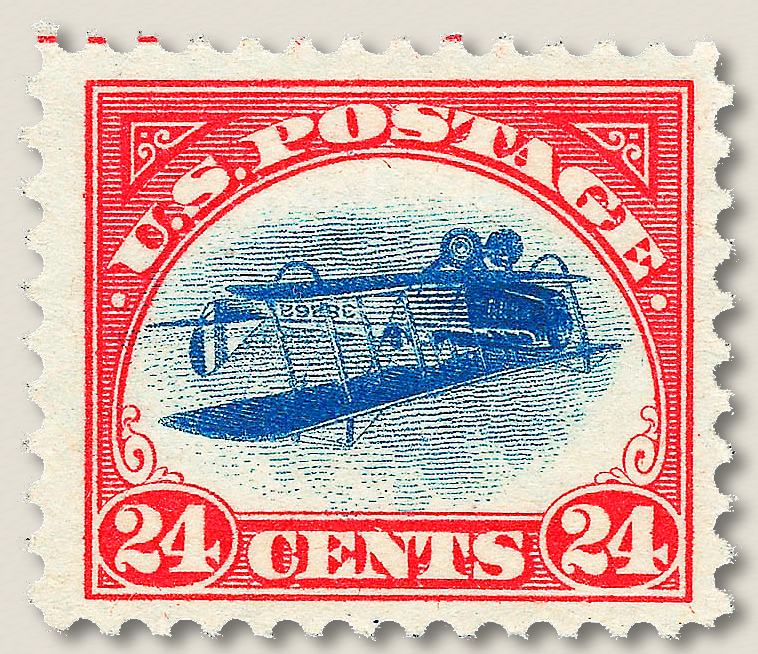
DigitalImageServices.com, Wikimedia Commons, Public Domain - U.S. postage stamp published prior to 1978
The Inverted Jenny is the most famous error stamp in the world. A 24-cent airmail stamp issued on May 10, 1918, where the Curtiss JN-4 ("Jenny") airplane in the center was accidentally printed upside down. Only one sheet of 100 stamps was sold to the public before the error was caught, making every surviving example a philatelic treasure. The plate blocks, stamps from the corners of the sheet that include the plate number in the margin, are the rarest and most valuable configuration of this legendary error.
Position 3 refers to the upper right corner of the sheet, one of four possible plate block positions. These plate blocks are among the most valuable items in all of philately, with values reaching into the millions.
The Error That Made History
On May 10, 1918, a clerk named William T. Robey visited the New York Avenue post office in Washington, D.C., hoping to purchase the new 24-cent airmail stamps that were being issued that day. The stamps were being produced using a two-color intaglio process: the red frame was printed first, then the sheet was fed through the press a second time to print the blue airplane in the center. If a sheet was fed incorrectly during the second pass, the airplane would be inverted.
Robey purchased one full sheet of 100 stamps and immediately noticed the error. He paid $24 (face value) for the sheet, which he recognized as potentially valuable. The post office attempted to recall the sheet, but Robey had already left with his purchase.
Robey sold the sheet to Philadelphia stamp dealer Eugene Klein for $15,000, an enormous sum in 1918. Klein then sold it to collector Colonel Edward H.R. Green (son of the famous financier Hetty Green) for $20,000. Green had the sheet broken into singles and blocks for distribution.
The Sheet Layout and Plate Blocks
The original sheet of 100 stamps was arranged in a 10 x 10 grid. The four corners contained plate number markings in the selvage (the blank paper margin surrounding the stamps), making corner blocks the most desirable configurations.
The plate blocks are designated by position:
Position 1: Upper left corner
Position 2: Upper right corner (sometimes designated Position 3 depending on the numbering convention)
Position 3: Lower left corner
Position 4: Lower right corner
Colonel Green had the sheet divided into various configurations. The plate blocks, arrow blocks, centerline blocks, and singles each have their own collecting hierarchy, with plate blocks at the absolute top.
Specifications
Scott Catalog Number: C3a (the inverted error of Scott C3)
Denomination: 24 cents
Colors: Red frame, blue center (airplane inverted)
Printing method: Two-color flat plate intaglio
Paper: Unwatermarked
Perforation: Gauge 11
Total printed (error): 100 stamps (one full sheet)
Original purchase price: $0.24 per stamp ($24.00 for the sheet)
Original purchaser: William T. Robey
Date of issue: May 10, 1918
Value Guide
Inverted Jenny values have set records repeatedly throughout philatelic history. Plate blocks are the ultimate prizes.
Single Stamps:
Fine to Very Fine condition: $200,000 to $400,000
Extremely Fine: $400,000 to $700,000
Superb: $800,000 to $1,500,000+
Position 57 (the specific stamp shown in many reference images) sold for $977,500 at Robert A. Siegel Auction Galleries in 2007.
Plate Blocks:
Plate blocks of four: $2,000,000 to $5,000,000+ depending on condition, position, and centering
Plate blocks of six or eight: Even rarer configurations that may or may not survive intact
Arrow Blocks and Centerline Blocks:
Arrow blocks (from the center of each sheet edge): $1,500,000 to $3,000,000
Centerline blocks: $1,000,000 to $2,500,000
The most famous single Inverted Jenny sale was the Position 49 stamp, which sold at auction for $1,593,000 in 2016. The plate blocks, when they appear (which is extremely rarely), command multiples of single stamp prices.
Condition Assessment
For a 100+ year old stamp that has been the subject of intense scrutiny since the day it was purchased, condition grading is both critical and well-documented.
Centering: The Inverted Jenny was notoriously poorly centered. Many stamps show the frame shifted significantly relative to the vignette (airplane). Well-centered examples command massive premiums.
Gum: Original gum condition matters. Never-hinged examples (extremely rare for a stamp from 1918) command the highest premiums. Lightly hinged is typical. Heavily hinged or no gum reduces value.
Perforations: All perforations should be intact, with natural, even teeth. Pulled or short perforations reduce value.
Color: Both the red frame and blue vignette should show fresh, unfaded colors. Oxidation of the red pigment is a concern.
Freshness: Overall appearance of the paper and printing. Stains, thins, or creases are significant defects at this price level.
Certification: Expert certification from the Philatelic Foundation or American Philatelic Expertizing Service is mandatory. No Inverted Jenny should be purchased without current expert authentication.
The Census
Of the 100 Inverted Jenny stamps that were originally purchased, the current status of most individual positions is documented by philatelic researchers:
Approximately 85 to 90 stamps are accounted for in collections, museums, or auction records
A small number remain unaccounted for or are in private hands without public documentation
The Smithsonian National Postal Museum holds several examples
McCoy sheet position maps track the known history of each individual stamp
This extraordinary level of documentation for individual stamps, each with its own provenance chain, is unique in the collecting world and adds to the Inverted Jenny's mystique.
The 2013 Reissue
In 2013, the United States Postal Service issued a $2 stamp commemorating the Inverted Jenny. In a clever marketing move, the USPS intentionally included a small number of sheets where the airplane was printed right-side up (effectively an "uninverted Jenny error of the error"). These sheets, with 100 correct stamps each, were distributed randomly and have their own collector following, though they are orders of magnitude less valuable than the original 1918 error.
Collecting Context
Error Stamp Collectors: The Inverted Jenny is the pinnacle. It is to error stamp collecting what the 1856 British Guiana One-Cent Magenta is to stamp rarity. A single Inverted Jenny stamps defines a collection.
Airmail Collectors: As Scott C3a, it is the key to any United States airmail collection. Most collectors represent the stamp with a photograph or certificate of expertise, as ownership is limited to wealthy individuals and institutions.
Investment and Prestige: At the plate block level, the Inverted Jenny competes with fine art and rare gems as a store of value. Auction appearances are major philatelic events.
Accessible Alternatives: Collectors who cannot afford an original can acquire the correctly printed Scott C3 (24-cent Jenny) for $50 to $200 in mint condition, providing the same design and historical connection.
Why This Stamp Matters
The Inverted Jenny transcends philately. It is a cultural artifact that represents the romance of error, the thrill of discovery, and the extraordinary value that scarcity creates. William Robey's $24 purchase, made on an ordinary morning at an ordinary post office, became one of the most valuable transactions in collecting history.
The plate block configurations represent the rarest form of the rarest stamp. They are not just collectibles. They are monuments to the idea that the most extraordinary things sometimes happen by accident.
Related Items
Have This Item?
Our AI appraisal tool is coming soon. Upload photos, get instant identification and valuation.
Get Appraisal