2001 SP Authentic Tiger Woods #45
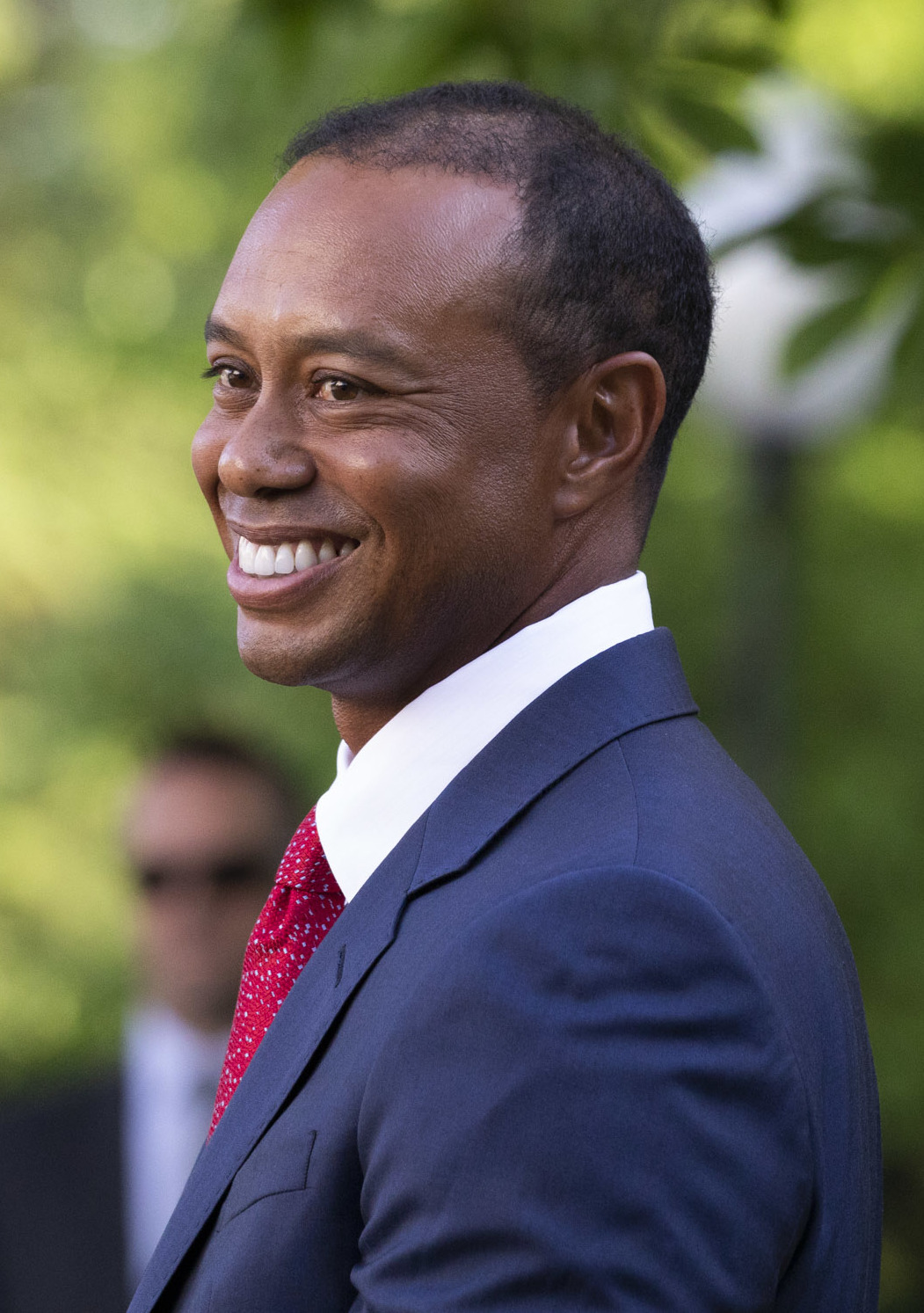
White House Photo, Public Domain, via Wikimedia Commons
Quick Value Summary
Condition Estimated Value (Auto /900) Estimated Value (Gold Auto /100) Raw/Ungraded $4,900 - $9,100 $30,000 - $50,000 PSA 9 / BGS 9 $8,000 - $12,000 $50,000 - $80,000 BGS 9.5 $15,000 - $17,500 $100,000+ PSA 10 $35,000 - $46,000 $240,000+ BGS 10 Pristine $46,400+ $500,000+ (if one exists) Values based on Sports Card Investor data, eBay sold listings, and Card Ladder data through February 2026.
The Story Behind the Card
Golf and trading cards had almost nothing to do with each other before Tiger Woods showed up.
Sure, there had been golf cards before. The 1997-98 Grand Slam Ventures Masters Collection featured Tiger on a card that looked more like a poster than a proper trading card. Sports Illustrated for Kids had included Tiger on a perforated sheet in their December 1996 issue. But nobody was opening packs of golf cards the way they opened packs of baseball or basketball cards. The hobby infrastructure simply did not exist for golf.
Then Upper Deck released 2001 SP Authentic Golf, and everything changed.
By 2001, Tiger Woods had already won six major championships, including the "Tiger Slam" (holding all four major trophies simultaneously, accomplished by winning the 2000 U.S. Open, 2000 Open Championship, 2000 PGA Championship, and 2001 Masters in succession). He was the most dominant force in professional sports, and Upper Deck saw an opportunity to create a premium golf card product built around his appeal.
The 2001 SP Authentic Golf set was the first major golf card release from a top-tier manufacturer, and it was designed from the ground up as a premium product. Boxes containing 24 packs of 4 cards retailed at prices that would eventually climb to around $1,500 on the secondary market. Each box was guaranteed to contain one autograph card, and the possibility of pulling a Tiger Woods autograph was the primary selling point.
Card #45 in the set is Tiger Woods' Authentic Stars Autograph. It features an on-card autograph (not a sticker auto) on a clean, modern design. The base version is numbered to 900 copies. A Gold parallel exists numbered to just 100.
This card, along with the 2001 Upper Deck #1 base card, is considered one of Tiger's two "official" rookie cards. The SP Authentic autograph version is by far the more valuable and sought-after of the two.
Why This Card Matters
Several factors combine to make the 2001 SP Authentic Tiger Woods #45 the most important golf card ever produced.
On-Card Autograph: In an era when sticker autographs were becoming the industry norm (a player signs a sticker that is later applied to the card), Upper Deck secured genuine on-card autographs from Tiger Woods. This matters enormously to collectors who view sticker autos as inferior. The pen-on-card signature adds both authenticity and visual appeal.
Print Run of 900: This is low enough to create genuine scarcity but high enough that copies do appear on the market regularly. It hits a sweet spot where the card is rare enough to feel special but available enough to actually acquire.
First Major Golf Card Product: The 2001 SP Authentic set essentially created the golf card market. Before this product, golf cards were a novelty. After it, they became a legitimate collecting category. Tiger's card is the cornerstone of that entire market segment.
Tiger's Dominance: In 2001, Tiger Woods was arguably the most famous athlete on the planet. His 15 major championships (as of 2019) and 82 PGA Tour wins (tying Sam Snead's all-time record) give the card lasting significance.
Identification Guide
Card Front:
Clean, modern SP Authentic design
Tiger Woods photograph
On-card autograph in blue ink
Numbered to /900 (stamped on front)
"Authentic Stars" branding
Card Back:
Standard biographical information
Serial number matching the front
2001 SP Authentic branding
Key Variations:
Base Autograph (/900): The standard version described above
Gold Autograph (/100): Same design but with gold foil elements and numbered to 100. Dramatically more valuable.
Other Tiger Woods Cards in the Set:
#51 Preview: A non-autograph preview card, sometimes confused with the autograph version. Worth significantly less (around $10 to $70 depending on grade).
Sign of the Times: A separate autograph insert series with multiple variations based on specific tournament wins. These include versions numbered to /274 (Players Championship), /273 (Bay Hill), /66 (The Memorial), /65 (Augusta National), /29 (29th PGA Tour Victory), and /25 (Gold). The Augusta National /65 and the Gold /25 are particularly scarce.
Tour Swatch: Game-worn material cards. The Green Patch version (/500) in PSA 9 has sold for around $400 to $600.
Value by Condition
The 2001 SP Authentic Tiger Woods #45 Authentic Stars Autograph is the most valuable golf card in existence. Here are current market values based on recent sales:
Raw/Ungraded: $4,900 to $9,100. The most recent raw sale tracked by Sports Card Investor was $9,100 (February 2026). However, raw prices vary widely because the autograph quality and card condition both affect desirability.
PSA 9 / BGS 9: $8,000 to $12,000. A solid grade for this card, and significantly more affordable than the top tiers.
SGC 9.5: $10,500 (September 2024). SGC-graded copies trade at a discount to PSA and BGS equivalents.
BGS 9.5 (Gem Mint): $15,000 to $17,500. The most recent BGS 9.5 sale was $15,000 (February 2026). Listings are currently in the $17,500 range.
PSA 10 (Gem Mint): $35,400 (January 2026). Current listings approach $46,400. PSA 10 copies are scarce and command a substantial premium over BGS 9.5.
BGS 10 Pristine: $46,400 (November 2025). This is the apex of the market for this card. Only 8 copies have achieved BGS 10 Pristine status. One listing has been posted at $500,000, though that asking price does not reflect actual market value based on completed sales.
Gold Parallel (/100): The Gold version has sold for $240,000 at the PSA 10 level. Even raw or mid-grade Gold copies command five figures.
Authentication and Fakes
The on-card autograph actually helps with authentication, since Tiger's signature is well-documented and consistent. But there are still concerns:
Fake Autographs on Base Cards: Some sellers attempt to add autographs to the non-autograph preview card (#51) to create a fraudulent version of the autograph card. The key difference is that genuine autograph cards are serial numbered to /900 or /100. If there is no serial number, it is not the autograph card.
Trimming: As with any high-value card, trimming is a concern. Professional grading services check for this, but raw purchases should be examined carefully.
Fake Slabs: Counterfeit PSA and BGS holders exist for high-value cards. Always verify the certification number on the grading company's website before purchasing.
Autograph Quality: Tiger's signature quality varies across the 900 copies. Some are bold and centered, while others are lighter or placed off-center. Collectors pay a premium for clean, bold autographs. This is not a fake-or-real issue but rather a desirability factor that affects value within the same grade.
Buy from Reputable Sources: For a card worth $10,000+, stick to established auction houses (Goldin, Heritage, PWCC), major dealers, or verified eBay sellers with strong track records.
Where to Sell
Goldin Auctions: Specializes in high-end sports cards and memorabilia. Their platform attracts serious buyers for five-figure cards. Seller fees typically run 0% to 10% depending on the consignment.
Heritage Auctions: Another strong option for cards at this value level. Heritage charges sellers 0% to 10% with buyer's premiums of 20% to 25%.
PWCC: Offers both auction and fixed-price marketplace options. Seller fees of 7% to 10%.
eBay: Viable but less ideal for cards at this price point. The 13.25% final value fee on a $35,000 sale amounts to roughly $4,638, which is significant. However, eBay's authentication service (required for cards over $750) provides some buyer protection that can facilitate higher prices.
Private Sales: Through dealer networks, collector forums, or social media groups. Zero platform fees, but finding the right buyer at the right price requires patience and connections.
Market Context
The golf card market remains niche compared to baseball, basketball, and football. This works both for and against the Tiger Woods SP Authentic. On one hand, the smaller collector base means less liquidity and fewer comparable sales to establish precise market values. On the other hand, the concentration of demand on a single player (Tiger dominates golf card collecting the way no athlete dominates any other sport's card market) means that this specific card captures a disproportionate share of the market's spending.
Tiger's return to competitive relevance with his 2019 Masters victory provided a significant boost to his card values. Future on-course performance (or lack thereof) and eventual Hall of Fame induction will continue to influence the market.
Related Items
Have This Item?
Our AI appraisal tool is coming soon. Upload photos, get instant identification and valuation.
Get Appraisal