1981 Topps Traded #816 Tim Raines Rookie
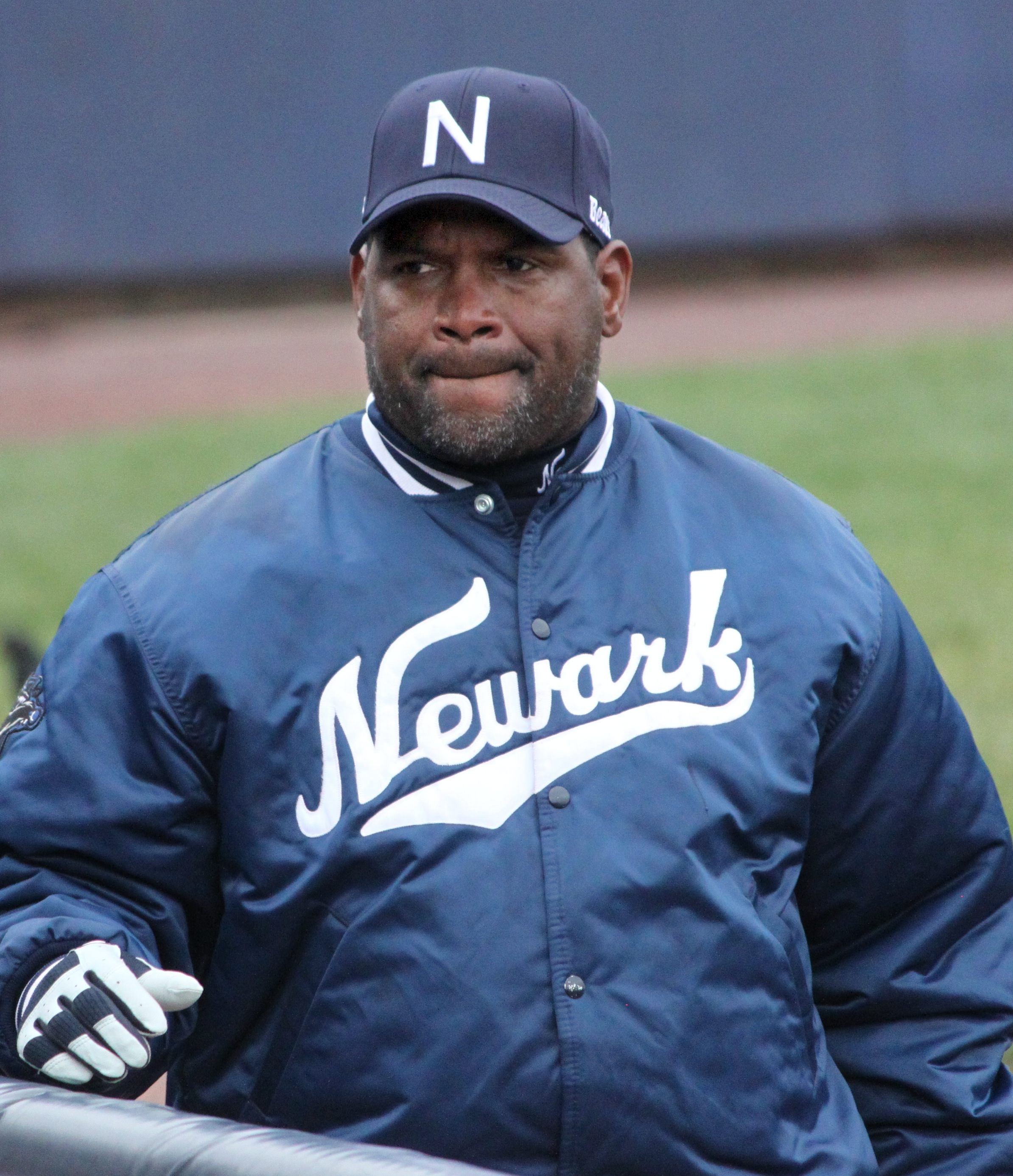
Phil Hoops, CC BY 2.0, via Wikimedia Commons
For years, Tim Raines was the most underappreciated superstar in baseball. He stole bases at a rate that rivaled Rickey Henderson, hit for average, played elite defense, and did it all with a style that made the game look effortless. When collectors talk about the 1981 Topps Traded set, they are really talking about two cards: Fernando Valenzuela and Tim Raines. And while Fernandomania grabbed all the headlines in 1981, it was Raines who quietly built one of the greatest careers of his generation. Card #816 from the 1981 Topps Traded set is his first solo Topps card, and it has become one of the most collectible rookie cards of the early 1980s.
Rock: The Career of Tim Raines
Timothy Raines Sr. was born on September 16, 1959, in Sanford, Florida. Nicknamed "Rock" for his muscular build, Raines signed with the Montreal Expos as a fifth-round draft pick in 1977. He made his major league debut in 1979 as a pinch runner before breaking through as a full-time player in 1981.
What a breakout it was. Despite the 1981 season being shortened by a players' strike, Raines stole 71 bases in just 88 games, leading the National League. He was named to the All-Star team and finished second in NL Rookie of the Year voting behind Valenzuela. Over the next several seasons, Raines established himself as one of the most dynamic players in the game.
His career numbers are staggering. Over 23 major league seasons spent with the Expos, White Sox, Yankees, Athletics, Orioles, and Marlins, Raines accumulated 2,605 hits, 808 stolen bases (fifth all-time), a .294 career batting average, and a .385 on-base percentage. He was a seven-time All-Star, won the 1986 NL batting title with a .334 average, and scored 1,571 runs. His stolen base success rate of 84.7% was the best in baseball history at the time of his retirement, and it still ranks among the highest ever.
What set Raines apart from other base stealers was his completeness as a player. He was not just a speedster who slapped singles and ran. He hit for power (170 career home runs), drew walks, and was a legitimate middle-of-the-order threat. His 1987 season with the Expos (where he hit .330 with 18 homers, 68 RBI, 123 runs scored, and 50 stolen bases) is considered one of the finest all-around seasons by any outfielder in the 1980s.
Raines was elected to the Baseball Hall of Fame in 2017, his final year on the ballot, receiving 86% of the vote. It was a long-overdue recognition of a player whose contributions had been overlooked for too long.
The 1981 Topps Traded Set: A Hobby Game-Changer
The 1981 Topps Traded set holds a special place in collecting history. It was the first time Topps made its extended update series a standalone boxed set, available exclusively through hobby dealers rather than in wax packs at retail stores. This decision changed the trajectory of the hobby.
The 132-card set featured players who had been traded or called up during the 1981 season, with each card distinguished by a "T" printed after the card number on the back. The design matches the regular 1981 Topps issue, with a color photo enhanced by a bi-colored border on two sides and the player's name, team, and position along the bottom.
While Raines did appear in the base 1981 Topps set (#479), he shared that card with fellow Expos prospects Roberto Ramos and Bobby Pate on a "Future Stars" multi-player card. The Traded set gave Raines (and Valenzuela) the solo spotlight treatment, which is why collectors consider #816 his true rookie card for solo card purposes.
The set includes nine Hall of Fame players overall, making it one of the most talent-rich extended series Topps ever produced. Complete boxed sets have recently sold in the $30 to $60 range, making the set remarkably accessible for what it contains.
What Makes the Raines Traded Rookie Valuable
The Hall of Fame factor. Raines' 2017 induction gave this card a significant boost. Before his election, it was an affordable sleeper. Afterward, demand jumped and prices followed.
Solo card status. This is the first Topps card where Raines appears by himself, which collectors strongly prefer over multi-player cards.
Set scarcity (relative). Because the 1981 Topps Traded set was only available through hobby channels as a boxed set, production numbers were lower than the regular Topps issue. While the set is not rare by modern standards, it was produced in smaller quantities than standard wax pack cards.
Condition sensitivity. Cards from boxed sets often look perfect at first glance but can have subtle issues (soft corners from stacking, edge dings from box handling) that affect grades. True Gem Mint copies are harder to find than you might expect.
Growing appreciation. As the hobby continues to reevaluate players from the 1980s, Raines' stock keeps rising. His statistical case for greatness is airtight, and collectors are catching up.
Condition and Grading: PSA Population Breakdown
Because the 1981 Topps Traded cards came in factory sets rather than wax packs, you might expect high-grade examples to be common. In practice, the PSA population tells a more nuanced story:
| PSA Grade | Population | Approximate Value |
|---|---|---|
| PSA 10 (Gem Mint) | ~164 | $1,200-$1,500 |
| PSA 9 (Mint) | ~907 | $55-$75 |
| PSA 8 (NM-MT) | ~500 | $20-$30 |
| PSA 7 (NM) | ~150 | $12-$18 |
| PSA 6 (EX-MT) | ~60 | $8-$12 |
| PSA 5 (EX) | ~30 | $5-$10 |
| PSA 4 and below | ~30 | $3-$8 |
The gap between PSA 9 and PSA 10 is dramatic. A PSA 9 sells for around $65, while a PSA 10 commands $1,200 to $1,500 or more. That 20x price multiplier reflects the genuine difficulty of achieving a perfect grade, even on cards from factory sets.
The most recent PSA 10 sale verified by Card Ladder was a Fanatics Collect weekly auction that ended on March 23 with a winning bid of $1,320. PSA 9 copies have been trading at an average of roughly $65 based on the last 10 verified sales.
What to Look For: Grading Tips for the 1981 Topps Traded Raines
Factory set cards present their own grading challenges. Here is what to examine:
Corner sharpness. This is where factory set cards most commonly lose points. Cards stacked in boxes experience compression on the corners, creating subtle rounding that is invisible to the naked eye but clearly visible under magnification. All four corners need to be crisp and pointed for a shot at PSA 10.
Centering. The 1981 Topps Traded cards generally have better centering than many vintage sets, but off-center examples definitely exist. Check both left/right and top/bottom alignment. For PSA 10 consideration, centering needs to be approximately 55/45 or better on both axes.
Surface quality. Look for print dots, roller marks, and any surface scratches. Hold the card at an angle under good lighting to spot imperfections. Factory set cards can also develop surface issues from contact with adjacent cards during storage.
Edge condition. Examine all four edges for chips, nicks, or rough cuts. The colored borders on 1981 Topps cards make edge wear fairly easy to spot. Pay particular attention to the top and bottom edges where cutting inconsistencies were more common.
Card stock and color. The best examples have crisp white card stock on the back (no yellowing or foxing) and rich, saturated colors on the front. Raines' Expos uniform should show vivid red, white, and blue tones.
Wax or gum stains. While these cards came in factory sets rather than wax packs, some were later stored in contact with wax pack cards or in less than ideal conditions. Check for any discoloration or residue.
Market Value and Recent Sales
The Tim Raines 1981 Topps Traded rookie occupies a sweet spot in the hobby: it is a Hall of Fame rookie card that remains accessible to most collectors while still offering meaningful upside for high-grade examples.
At the PSA 10 level, recent sales have been consistent. The card has been trading in the $1,200 to $1,500 range, with the last verified sale at $1,320 in a Fanatics Collect auction. This represents solid value for a Hall of Famer's rookie card in perfect condition.
PSA 9 copies are where the volume lives. With a population over 900, these are readily available and have been selling for approximately $55 to $75. For collectors who want a high-grade example without paying four figures, PSA 9 is the sweet spot.
PSA 8 copies are available for around $20 to $30, making this one of the most affordable ways to own a graded Hall of Fame rookie card. At that price point, it is hard to argue with the value proposition.
For raw (ungraded) copies, expect to pay $3 to $10 depending on visible condition. If you have a sharp eye and some patience, buying raw cards and submitting them for grading can be a cost-effective strategy, though the odds of hitting PSA 10 on any individual submission are slim.
Comparing the Raines card to other iconic rookies from the 1981 Topps Traded set, it sits comfortably in the middle tier. The Valenzuela (#850) commands higher prices in PSA 10 (around $3,000) due to its much smaller population (only 22 copies), while the Rollie Fingers (#761) is more affordable (PSA 10 copies average around $60).
The Long Road to Cooperstown
Part of what makes the Tim Raines rookie card compelling from a collecting standpoint is his underdog story. Despite putting up numbers that clearly warranted Hall of Fame induction, Raines spent 10 years on the BBWAA ballot before finally getting the call. His candidacy suffered from playing in Montreal (a small market with limited national television exposure), from being constantly compared to Rickey Henderson (who overshadowed every other base stealer of the era), and from the lingering shadow of his early-career substance issues, which he publicly addressed and overcame.
When Raines finally received 86% of the vote in 2017, it felt like the hobby exhaled. Card prices jumped immediately, and they have continued to appreciate as collectors recognize the value of his career. The 2017 induction transformed this from a $20 card in PSA 10 to a four-figure card, and the trajectory has remained positive.
Comparing the Raines to Other 1981 Topps Traded Rookies
The 1981 Topps Traded set is loaded with Hall of Fame talent, which gives collectors plenty of options and makes comparison shopping part of the fun.
Fernando Valenzuela (#850) is the set's most valuable card in top condition, with PSA 10 copies fetching around $3,000. The combination of Fernandomania nostalgia, Dodger fan demand, and a tiny PSA 10 population of just 22 copies creates premium pricing. By comparison, the Raines PSA 10 is more attainable at $1,200 to $1,500 with a population of 164.
Danny Ainge (#727) is another interesting card in the set. Better known for his basketball career, Ainge played briefly in the majors before committing to the NBA. His card is a fun novelty piece but does not carry the same collector weight as the Raines.
The Rollie Fingers (#761) offers excellent value as a Hall of Fame card from the set, with PSA 10 copies averaging only about $60. Fingers was already an established star at this point, making his card more of a "showing him in his new uniform" piece than a true rookie.
Dave Winfield (#855) rounds out the notable Hall of Famers, with his first card in Yankee pinstripes carrying modest premiums in top grades (PSA 10 copies around $135).
Among all of these, the Raines card arguably offers the best blend of upside potential and current affordability. His career numbers are comparable to or better than several fellow Hall of Famers in the set, and his card has not yet reached the premium levels that his statistics warrant.
Why This Card Belongs in Your Collection
The 1981 Topps Traded Tim Raines is the rare card that works for every type of collector. Set builders need it for one of the hobby's most important traded sets. Player collectors prize it as the definitive Raines rookie. Investors appreciate its Hall of Fame backing and reasonable entry points. And nostalgia collectors love it because it represents an era when baseball cards were still affordable fun, when a boxed set from your local hobby shop could contain future Hall of Famers.
At current prices, the Raines Traded rookie remains one of the best values in the Hall of Fame rookie card market. Whether you grab a PSA 9 for around $65 or stretch for a PSA 10 in the $1,300 range, you are getting a card with strong fundamentals, a compelling story, and room to grow as Raines' legacy continues to be re-evaluated by a new generation of baseball fans.
Related Items
Have This Item?
Our AI appraisal tool is coming soon. Upload photos, get instant identification and valuation.
Get Appraisal