1933 Goudey #106 Napoleon Lajoie
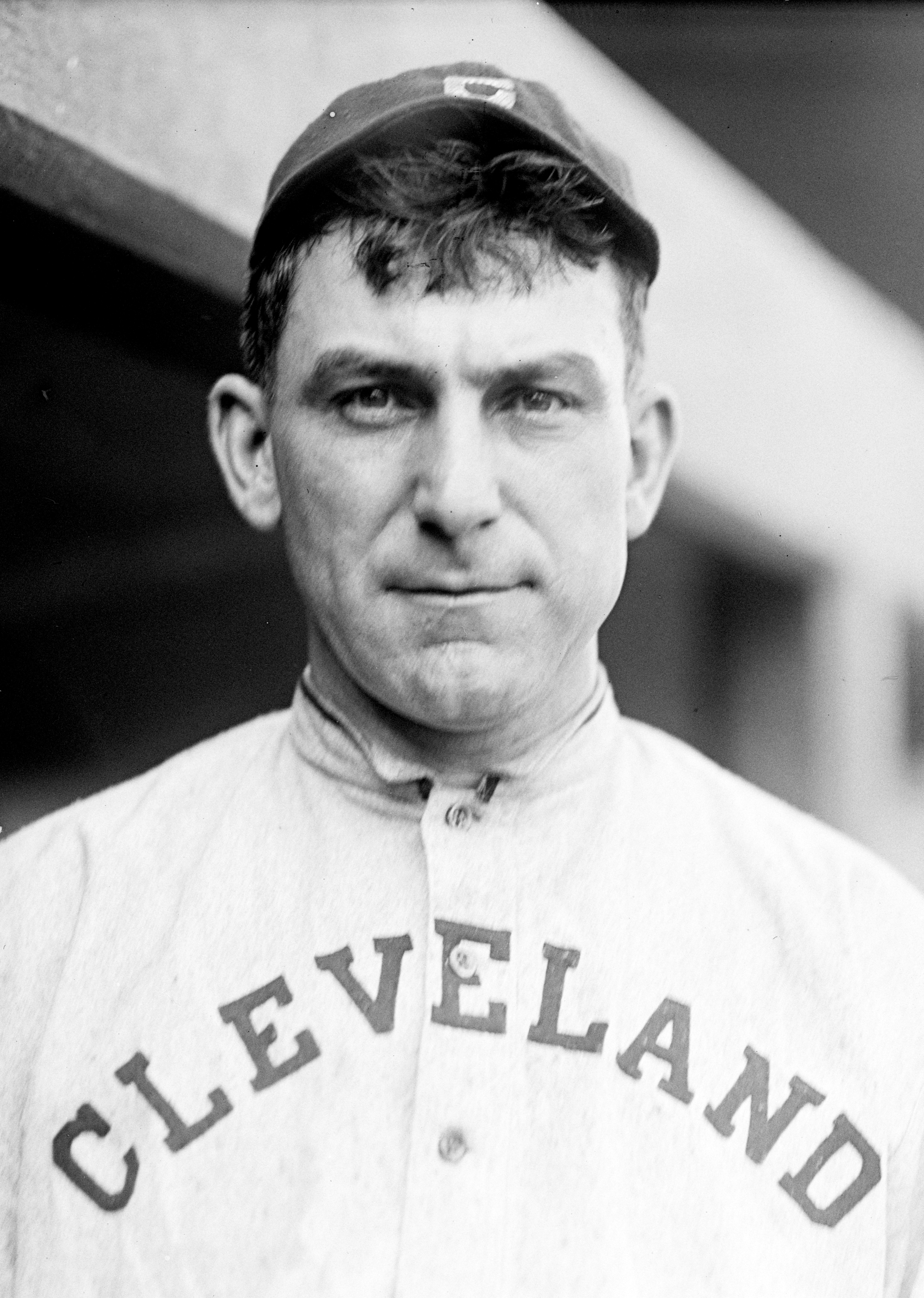
Nap Lajoie, circa 1913, Harris & Ewing Collection, Library of Congress, Public Domain via Wikimedia Commons
Every hobby has its white whale, and in baseball card collecting, the 1933 Goudey #106 Napoleon Lajoie might be the whitest whale of them all. This is not just a rare card. It is a card with one of the most unusual origin stories in all of collecting, a card that technically did not exist when the set was originally released, a card that was created only because persistent kids kept writing angry letters to a gum company. And today, it is worth a quarter of a million dollars.
The Origin Story
In 1933, the Goudey Gum Company of Boston released its "Big League Chewing Gum" set, a 240-card collection featuring the biggest stars in baseball. The set was a sensation. Kids across Depression-era America spent their pennies on packs, hoping to pull their favorite players. The cards featured colorful artwork, player biographies on the back, and were numbered 1 through 240.
There was just one problem: card #106 did not exist.
Goudey had deliberately left the number vacant. The likely reason was clever marketing. Without #106, no collector could ever complete the set, which meant they would keep buying packs in a futile search for the missing card. It was an early example of manufactured scarcity, and it drove young collectors absolutely crazy.
Letters poured into Goudey's offices from frustrated kids (and their parents) demanding the missing card. The company received so many complaints that they eventually relented. In 1934, Goudey printed card #106, assigning it to Napoleon "Nap" Lajoie, the Hall of Fame second baseman who had retired from baseball nearly two decades earlier.
The card was printed on a 1934 production sheet alongside the 96 cards of that year's Goudey set. But it carried the 1933 design, the 1933 card back format, and the number 106, making it technically a 1933 card produced in 1934. Goudey mailed the card directly to collectors who wrote in requesting it. It was never distributed in packs.
Why Lajoie?
The choice of Napoleon Lajoie for card #106 is somewhat puzzling. By 1934, Lajoie had been retired for 18 years and was not exactly a household name among Depression-era children. He had been elected to the Baseball Hall of Fame's initial class in 1937 (retroactively), but at the time the card was produced, that honor was still three years away.
The most likely explanation is simple: Goudey needed a Hall of Fame-caliber player who would not require a new licensing agreement with an active player's team. Lajoie, as a retired player, was available. His career statistics were outstanding (.338 lifetime batting average, over 3,200 hits, three batting titles, a Triple Crown in 1901), giving the card legitimate star power even if the kids receiving it had never seen him play.
Rarity: How Many Exist?
Because the Lajoie card was only distributed by mail and was never sold in retail packs, the number of surviving examples is extremely small. The exact number is not known with certainty, but estimates suggest that somewhere between 50 and 100 copies were originally produced and mailed out.
All copies available today are believed to come from one of two sources: the original 1934 mail-in fulfillment, or a batch of leftover Goudey stock that was sold off in the 1960s when the company's remaining inventory was dispersed. Either way, the supply is tiny.
As of the most recent PSA population report, fewer than 90 examples have been graded by PSA across all grades. No PSA 10 (Gem Mint) example exists. The highest graded copy is a PSA 9 (Mint), of which only one is known.
The Card Itself
The 1933 Goudey Lajoie card measures approximately 2-3/8" by 2-7/8", consistent with the rest of the 1933 set. The front features a color illustration of Lajoie in a Cleveland uniform, painted in the same artistic style as the other 1933 Goudey cards. The back carries a brief biography and career summary, along with the Goudey Big League Chewing Gum branding and the card number 106.
Despite being printed in 1934, the card is visually indistinguishable from the 1933 cards in terms of design, border style, and card stock. It was clearly intended to fit seamlessly into the existing set.
Grading and Values
The 1933 Goudey Lajoie is one of the most valuable baseball cards in the world. Here are approximate values by PSA grade:
| PSA Grade | Description | Approximate Value |
|---|---|---|
| PSA 9 (Mint) | Only 1 known | $250,000+ |
| PSA 8 (NM-MT) | Exceptional condition | $100,000 - $150,000 |
| PSA 7 (Near Mint) | Minor wear only | $50,000 - $80,000 |
| PSA 6 (EX-MT) | Light wear, good eye appeal | $30,000 - $50,000 |
| PSA 5 (Excellent) | Moderate wear, still presentable | $18,000 - $30,000 |
| PSA 4 (VG-EX) | Noticeable wear, corner rounding | $10,000 - $18,000 |
| PSA 3 (Very Good) | Significant wear, creases possible | $6,000 - $12,000 |
| PSA 2 (Good) | Heavy wear, major creases | $4,000 - $7,000 |
| PSA 1 (Poor) | Severe damage, heavily worn | $2,000 - $4,000 |
| Authentic (no grade) | Trimmed, altered, or ungradable | $1,500 - $3,000 |
A PSA NM-MT 8 copy sold at RR Auction for $127,904. The lone PSA 9 last sold for $250,100. Even low-grade copies command five-figure prices.
Authentication: Spotting Fakes
Given the card's value, counterfeits and alterations are a real concern. Here is what to look for:
Card Stock
The original Goudey card stock has a distinctive feel and thickness. Genuine cards have a slightly textured surface and a specific rigidity. Reprints on modern card stock feel different immediately.
Printing Quality
Under magnification, genuine cards show the halftone dot pattern consistent with 1930s lithographic printing. Modern reproductions use different printing technology that produces a different dot structure.
Color Registration
Original cards may show slight color registration shifts, a normal artifact of 1930s printing. Perfectly registered colors can actually be a red flag indicating a modern reprint.
Card Dimensions
Genuine cards should measure within the normal range for the 1933 Goudey set. Cards that are slightly smaller may have been trimmed to remove worn edges (trimming is considered an alteration and dramatically reduces value).
Back Printing
The card back should show the correct 1933 Goudey format with period-appropriate typography and ink color. The biography text should be crisp but not unnaturally sharp.
PSA or SGC Grading
For a card of this value, professional grading and authentication by PSA or SGC is essential. Do not purchase an ungraded Lajoie card of any claimed condition without first having it authenticated.
The Complete 1933 Goudey Set
The Lajoie card is the key to completing the 1933 Goudey set, which includes 240 numbered cards. Other notable cards in the set include four Babe Ruth cards (#53, #144, #149, #181), two Lou Gehrig cards (#92, #160), and a Jimmie Foxx (#29). The complete set in any grade is a major achievement, and the Lajoie card is invariably the most expensive piece.
Interestingly, the Babe Ruth card that replaced #106 on the original 1933 print sheets is itself a valuable card. Ruth's image was inserted into the #106 position so that the 24-card sheet could be printed without a blank space. This means that, in a sense, Babe Ruth and Nap Lajoie are forever linked through that one card number.
The Broader Market Context
The 1933 Goudey Lajoie occupies a special niche in the vintage card market. It is not the most expensive baseball card (the T206 Honus Wagner holds that title), but it may have the most interesting backstory. Its value is driven by a combination of extreme rarity, historical significance, and the compelling narrative of the card that was never supposed to exist.
The vintage baseball card market has seen extraordinary growth in recent years, with record-setting auction results across many categories. The Lajoie card has benefited from this trend, with values at all grade levels increasing substantially since 2019.
What to Look for When Buying
Buy graded. At these prices, a PSA or SGC holder is mandatory. The authentication alone is worth the grading fee many times over.
Verify the PSA/SGC holder. Counterfeit holders exist. Check the certification number against the PSA or SGC online database to confirm authenticity.
Understand the grade. A PSA 5 and a PSA 6 may look similar to an untrained eye, but the price difference can be $15,000 or more. Study the grading standards so you understand what you are buying.
Buy from established dealers or auction houses. Heritage Auctions, PWCC, REA, RR Auction, and other major sports card auction houses provide expertise, guarantees, and market-appropriate pricing.
Consider your goals. If you want the card as a trophy piece and can afford it, buy the best grade you can. If you want it as a set completion card, lower grades still tell the same remarkable story.
Factor in insurance. A card worth five or six figures needs proper insurance coverage, which means getting a formal appraisal and adding it to your policy.
Appreciate the story. Half the value of owning a 1933 Goudey Lajoie is being able to tell people the story of how it came to exist. It is one of the great tales in all of collecting.
Related Items
Have This Item?
Our AI appraisal tool is coming soon. Upload photos, get instant identification and valuation.
Get Appraisal