1970 Hohner Clavinet D6 (Stevie Wonder Model)
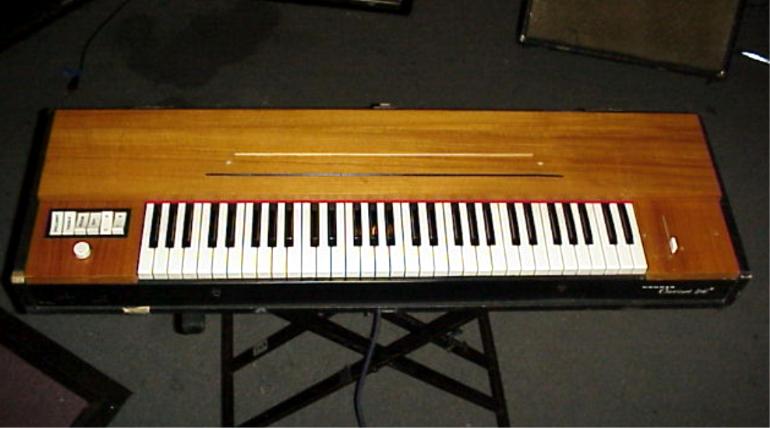
Photo by Tangamandapiou, Wikimedia Commons, CC BY-SA 3.0
The opening riff of "Superstition" is one of the most recognizable sounds in popular music. That percussive, funky, guitar-like tone did not come from a guitar at all. It came from a Hohner Clavinet D6, an electromechanical keyboard that became the defining instrument of 1970s funk, soul, and rock. Today, original D6 models are prized collectibles that command serious attention from musicians and vintage keyboard enthusiasts alike.
What Is the Hohner Clavinet D6?
The Clavinet is an electric clavichord designed by German engineer Ernst Zacharias and manufactured by the Hohner company in Trossingen, West Germany. Production of various Clavinet models ran from 1964 to 1982, with approximately 38,000 units manufactured across all versions.
The D6, introduced around 1971, represents the most popular and sonically versatile model in the Clavinet lineup. It replaced the earlier C and L models and introduced a six-position pickup selector system that gave players far more tonal options than any previous version.
How the Clavinet D6 Works
Unlike a piano, which uses felt hammers to strike strings, the Clavinet operates more like an amplified clavichord. Each of its 60 keys (ranging from F1 to E6) has a small rubber pad attached beneath it. When you press a key, the pad strikes a tensioned steel string against an anvil point, creating a sharp, percussive attack.
Two sets of electromagnetic pickups sit above and below the strings, similar in concept to neck and bridge pickups on an electric guitar. This dual-pickup design is central to the D6's versatility. The instrument's rocker switches let players select different pickup combinations.
Pickup Selector Positions:
AC (Both pickups, bright and full)
BC (Lower pickup only, darker tone)
AD (Upper pickup only, thinner and brighter)
BD (Single pickup, mellow)
Filter Switches:
Brilliant (treble boost)
Treble (moderate high-frequency emphasis)
Medium (balanced midrange)
Soft (bass-heavy, rounded tone)
The combination of four pickup positions and four filter options gives players 16 distinct tonal variations right from the instrument itself, before any external effects processing.
When a key is released, the vibrating string passes through a weave of yarn that dampens the sound immediately. This quick decay is part of what gives the Clavinet its characteristic staccato quality. Each string is individually tuned using machine heads positioned along the front of the harp assembly.
The Stevie Wonder Connection
No artist is more closely associated with the Clavinet than Stevie Wonder. His relationship with the instrument goes back to the late 1960s, and by the 1970s, Hohner was featuring Wonder in their advertising materials.
Wonder's use of the Clavinet on "Superstition" (1972) transformed the instrument from a niche keyboard into a cultural phenomenon. The song's opening riff demonstrated that the Clavinet could produce sounds more aggressive and rhythmically compelling than any other keyboard of its era.
Beyond "Superstition," Wonder used the Clavinet extensively throughout his classic period albums, including "Talking Book" (1972), "Innervisions" (1973), "Fulfillingness' First Finale" (1974), and "Songs in the Key of Life" (1976). Tracks like "Higher Ground" and "Maybe Your Baby" showcase the instrument's range from funky rhythm parts to melodic lead lines.
Wonder's main stage Clavinet is a customized D6 with modified preamps and high-quality film capacitors. He has continued to record and tour with the instrument into the 21st century, owning several models.
Other Notable Clavinet Players
While Wonder is the instrument's most famous champion, many other artists made significant use of the Clavinet D6:
Billy Preston used it on numerous recordings, including work with the Beatles and the Rolling Stones
The Band featured the Clavinet prominently on "Up on Cripple Creek" (1969), played by Garth Hudson
Herbie Hancock incorporated the Clavinet into his groundbreaking jazz-funk recordings
Keith Emerson of Emerson, Lake & Palmer used it in progressive rock contexts
Duke Ellington explored the instrument in his later recordings
George Duke made it a centerpiece of his jazz-fusion work
Led Zeppelin used the Clavinet on tracks like "Trampled Under Foot"
The instrument appeared across genres throughout the 1970s, from reggae (where it was popular in Jamaican recording studios) to disco, soul, and rock.
Construction and Design
The D6 has a distinctive visual appearance that sets it apart from other keyboards of the era. The body is finished in a wood-grain laminate with black tolex covering, giving it an understated, professional look. The instrument sits in a rectangular case with a removable lid.
Internally, the build quality reflects 1970s German manufacturing standards. The string harp assembly is precisely constructed, with each string carefully positioned relative to its pickup. The keyboard mechanism uses metal key holders and plastic keys, a departure from the wooden actions found in traditional keyboard instruments.
Physical Specifications:
| Feature | Detail |
|---|---|
| Keys | 60 (F1 to E6) |
| Pickups | Dual electromagnetic (above and below strings) |
| Pickup Selectors | 4 rocker switches |
| Filter Switches | 4 rocker switches (Brilliant, Treble, Medium, Soft) |
| Output | Line level, 1/4" jack |
| Weight | Approximately 30-35 lbs |
| Dimensions | Approximately 40" x 16" x 6" |
| Power | AC mains |
| Years Produced | c. 1971-1978 |
The D6 in the Clavinet Lineup
The Clavinet went through seven distinct models during its production run:
Clavinet I (1964): Home instrument in heavy teak veneer box with built-in battery-powered speaker
Clavinet II: Updated version with similar home-oriented design
Clavinet C: First model widely adopted by professional musicians
Clavinet L: A smaller, lighter version
Clavinet D6 (c. 1971): The definitive model with dual pickups and expanded tone controls
Clavinet E7 (1978): More robust road version with black tolex covering and carrying handles
Clavinet Duo/Pianet Duo (late 1970s): Combined Clavinet and Pianet sounds in one instrument
The D6 sits at the sweet spot of the lineup. Earlier models lacked its tonal flexibility, while the E7, though more roadworthy, is generally considered to have a slightly different character. Most studio recordings from the classic era used the D6.
Playing Technique
The Clavinet rewards an aggressive playing style. Unlike a piano, where sustain and legato playing are common, the Clavinet sounds best with short, percussive attacks. Players often use a technique similar to guitar strumming, playing rhythmic chord patterns with quick releases.
The weighted keyboard allows for velocity-sensitive dynamics, meaning harder keystrokes produce louder, more aggressive tones. The instrument also responds to aftertouch, as pressing a key harder after the initial strike stretches the string slightly, creating a subtle pitch bend effect.
Most Clavinet recordings from the 1970s feature the instrument processed through effects pedals, particularly:
Wah pedals (the Mu-Tron III envelope filter was especially popular)
Phaser effects (for swirling, spacey tones)
Overdrive/distortion (for more aggressive, guitar-like sounds)
Chorus (for thickening the tone)
Condition Assessment for Collectors
When evaluating a vintage Clavinet D6, several factors determine both playability and value:
Condition Grades:
| Grade | Description | Typical Price Range |
|---|---|---|
| Excellent/Restored | Fully functional, new strings, cleaned contacts, working electronics | $3,500-$5,500 |
| Very Good | Plays well, minor cosmetic wear, all original | $2,500-$3,500 |
| Good | Functional but needs some work (sticky keys, worn pads) | $1,500-$2,500 |
| Fair | Partially functional, needs significant restoration | $800-$1,500 |
| Project/Parts | Non-functional, for restoration or parts | $400-$800 |
Key Areas to Inspect:
Rubber pads: These deteriorate over time and are the most common failure point. Replacements are available from specialist suppliers
Strings: Original strings may be rusty or corroded. Full restringing costs $150-$300 for parts
Electronics: The preamp circuit and pickup selector switches can develop crackling or dead spots
Key bushings: Worn bushings cause keys to wobble and produce uneven response
Yarn dampers: The damping yarn can become matted or disintegrate, causing unwanted sustain
Current Market Values
The Clavinet D6 has seen steady appreciation in the vintage keyboard market. Prices have climbed significantly since the early 2000s, when working examples could be found for under $1,000.
Current market pricing (2025-2026):
Fully restored, professional-grade examples: $4,000-$5,500
Clean, working originals with minor cosmetic wear: $2,500-$4,000
Players with cosmetic issues but good function: $1,500-$2,500
Non-working or parts instruments: $500-$1,000
The original retail price for a Clavinet D6 in 1973 was approximately $795, which translates to roughly $4,500-$5,000 in today's dollars. So a clean working example today sells for approximately what the instrument cost new, adjusted for inflation.
Provenance matters. Any D6 with documented history connecting it to a notable recording session or artist will command a significant premium. Stevie Wonder's personal instruments, if they ever came to market, would be in a completely different category.
What Affects Value
Factors That Increase Value:
Original case and lid in good condition
Working electronics with clean switches
Original strings (if still in good condition)
Serial number documentation
Known provenance or recording history
Early production examples
Original Hohner accessories (music stand, legs)
Factors That Decrease Value:
Non-original replacement parts
Damaged or missing case/lid
Corroded pickups
Modified electronics (unless professionally done)
Missing keys or broken key mechanisms
Cracked or warped harp assembly
Restoration and Maintenance
A cottage industry has developed around Clavinet restoration. Specialist repair shops offer full restoration services that typically include:
Complete restringing
Rubber pad replacement
Electronics overhaul (capacitor replacement, switch cleaning)
Key bushing replacement
Damper yarn replacement
Cosmetic restoration
Full professional restoration typically costs $800-$1,500 in labor plus parts. For collectors who are handy, many of these repairs can be done at home with guidance from online communities and specialist suppliers.
Common replacement parts are still available through companies like Vintage Vibe and specialist European suppliers. The Clavinet community is active and knowledgeable, with forums and social media groups dedicated to preservation.
Digital Alternatives
Modern digital keyboards and software plugins can emulate the Clavinet sound with varying degrees of accuracy. Products like the Scarbee Clavinet plugin for Native Instruments Kontakt and the AAS Lounge Lizard are popular options. However, purists argue that no digital version captures the exact feel and response of the original instrument's mechanical action.
The tactile experience of playing a real Clavinet, with its weighted keys, percussive string attack, and physical aftertouch, remains something that digital technology has not fully replicated. This is one reason why original instruments continue to hold their value despite the availability of digital alternatives.
Why It Matters
The Hohner Clavinet D6 occupies a unique position in music history. It took an instrument designed for playing Baroque music at home and, through the creativity of artists like Stevie Wonder, transformed it into the voice of an entire musical era. The funk, soul, and rock recordings of the 1970s would sound fundamentally different without it.
For collectors, the D6 represents an accessible entry point into vintage keyboard collecting. Unlike rare synthesizers that can cost tens of thousands of dollars, a playable Clavinet D6 can still be acquired for a few thousand dollars. And unlike many vintage instruments, it remains a practical tool for modern music-making.
Whether you are a musician looking for that authentic funk keyboard sound or a collector drawn to the instrument's history and design, the Hohner Clavinet D6 rewards close attention. It is a piece of musical history that you can still plug in and play.
Related Items
Have This Item?
Our AI appraisal tool is coming soon. Upload photos, get instant identification and valuation.
Get Appraisal