Fender Rhodes Mark I Stage Piano (73-Key, 1969-1974) Value & Price Guide
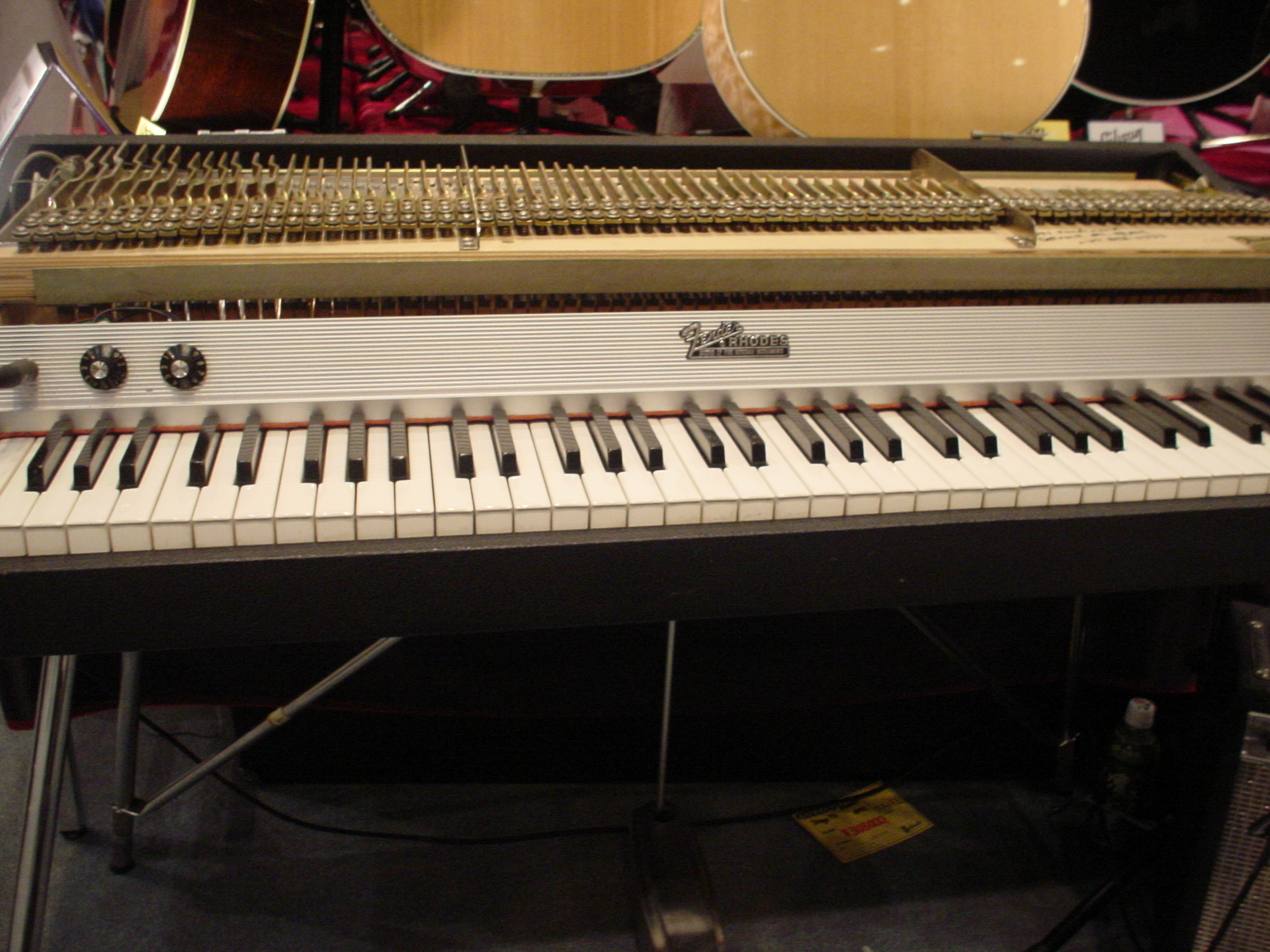
CC BY-SA 3.0, via Wikimedia Commons
Harold Rhodes built his first piano for wounded soldiers in Army Air Corps hospitals during World War II. The instrument used pieces of aluminum tubing from discarded B-17 bombers as tone generators, struck by wooden mallets. It fit on a bedside table. Soldiers who had never played music before could pick out melodies while recovering from injuries. That experience convinced Rhodes that there was a market for a portable, affordable piano that didn't need tuning like an acoustic grand.
After the war, Rhodes spent two decades refining his design. Fender Musical Instruments acquired the manufacturing rights in 1965, and by 1969, the Fender Rhodes Mark I Stage Piano was in production. The 73-key version became the standard. It weighs about 130 pounds, produces sound through struck tines and electromagnetic pickups, and has a bell-like tone that no synthesizer has ever truly replicated. Herbie Hancock played it on "Chameleon." Stevie Wonder played it on "You Are the Sunshine of My Life." Ray Charles, Chick Corea, Billy Joel, Radiohead. The list reads like a music history textbook.
Quick Value Summary
Item: Fender Rhodes Mark I Stage Piano (73-key)
Year: 1969-1974
Category: Musical Instruments
Condition Range:
- Project/Non-Working: $800 - $1,500
- Fair (works but needs service): $1,500 - $2,500
- Good (playable, cosmetic wear): $2,500 - $4,000
- Very Good (clean, well-maintained): $4,000 - $6,000
- Excellent (restored or mint original): $6,000 - $9,000+
Rarity: Common overall but clean early examples (1969-1972) increasingly scarce
The Story
The Mark I Stage Piano was designed for gigging musicians. Unlike the "Suitcase" model with built-in amplifier and speakers, the Stage was just the keyboard and legs. You plugged it into whatever amp was available. At 130 pounds, it wasn't light, but compared to hauling an acoustic piano to a club date, it was a revelation.
The tone generation is entirely mechanical and electromagnetic. Each key activates a hammer that strikes a thin steel tine mounted next to a tone bar. The tine vibrates, and an electromagnetic pickup converts that vibration into an electrical signal. There are no samples, no oscillators, no digital components. The sound is created by physical vibration, which is why each Rhodes has its own character.
The 1969 to 1974 period is considered the golden era. These early instruments tend to have brighter, more chimey tone bars and a more responsive action. After CBS pushed for higher production volumes in the mid-1970s, quality control became less consistent. The Mark II (1979) is generally considered inferior.
How to Identify It
Name Plate: "Fender Rhodes" above the keys. Early models (1969-1970) may show different fonts
Key Count: 73 keys (E to E). An 88-key version exists but is less common
Serial Number: Located on a plate near the piano harp
Tolex Covering: Black tolex over particle board case
Legs: Chrome-plated tubular steel legs
Common Confusions:
The "Suitcase" model includes built-in amp and speakers. Different value
The Mark II (1979-1983) has a flat-top lid. Generally less desirable
Rhodes Music Corporation instruments (post-Fender) and modern reissues are different products
Value by Condition
Project/Non-Working - $800 to $1,500 Doesn't produce sound, has broken tines, significant damage, or missing components. A skilled technician can often restore one for $500-$1,500 in parts and labor.
Fair - $1,500 to $2,500 Makes sound but needs service. Dead keys, uneven voicing, sluggish action common. Cosmetically worn but structurally sound.
Good - $2,500 to $4,000 All keys work. Tone reasonably even. Action feels good. Cosmetic wear present. A working musician's instrument.
Very Good - $4,000 to $6,000 Professionally serviced. All tines intact and voiced. Action responsive and even. Cosmetics clean.
Excellent - $6,000 to $9,000+ Exceptionally preserved original or professional restoration. All original parts present and functional. Studios and collectors compete for these.
Common Issues and Repairs
Broken Tines: Most common repair. Replacement set: $200-$400
Pickup Alignment: Time-consuming but straightforward adjustment
Hammer Tips: Harden over time. Replacement set: $100-$200
Electronics: Simple preamp circuit. Aftermarket upgrades available from Vintage Vibe
Where to Sell
Reverb.com: Dominant online marketplace for instruments. 5%-7.5% fees
eBay: Active market but shipping is expensive. Local pickup preferred
Craigslist/Facebook Marketplace: Best for local sales, no fees
Vintage Keyboard Dealers: Specialists like Vintage Vibe
Estimated Selling Costs:
Reverb fees: 5% to 7.5%
Shipping: $200 to $400 via freight
Professional setup before sale: $200-$500 (can increase price by more)
Not sure about the condition of yours? Upload a photo to Curio Comp for a quick AI-powered estimate.
Explore More
The Fender Rhodes Mark I is one of those instruments where the sound is immediately recognizable. Two notes and you know what it is. From Herbie Hancock's "Head Hunters" to Radiohead's "Everything in Its Right Place," the Rhodes defined what an electric piano could be. Browse all Musical Instruments items ->
Related Items
Have This Item?
Our AI appraisal tool is coming soon. Upload photos, get instant identification and valuation.
Get Appraisal