Sunday at the Village Vanguard (1961 Riverside First Pressing): The Live Jazz Record That Changed Everything
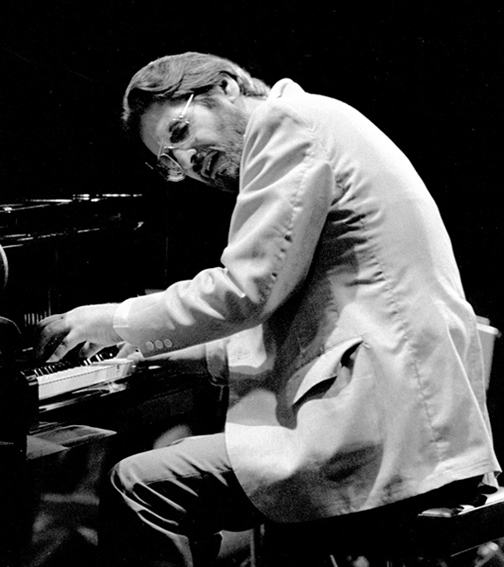
Brian McMillen, CC BY-SA 3.0, via Wikimedia Commons
On June 25, 1961, three musicians walked into a small basement jazz club on Seventh Avenue in Greenwich Village and played a set that would be studied, debated, and revered for the next six decades and counting. Pianist Bill Evans, bassist Scott LaFaro, and drummer Paul Motian performed two sets at the Village Vanguard that Sunday afternoon and evening. Riverside Records captured both on tape. Eleven days later, Scott LaFaro was dead at age 25, killed in a car accident in upstate New York.
The resulting album, Sunday at the Village Vanguard, released later that year as Riverside RLP 376 (mono) and RS 9376 (stereo), became one of the most important live recordings in jazz history. For vinyl collectors, the original Riverside first pressing represents the Holy Grail of post-bop jazz records: a document of musical genius captured at its absolute peak, released on a legendary independent label, and shadowed by the kind of tragedy that gives great art an almost unbearable emotional weight.
The Village Vanguard Sessions
The Bill Evans Trio that entered the Village Vanguard in June 1961 was unlike any piano trio that had come before. Traditional piano trios operated on a hierarchy: the pianist led, the bassist accompanied, and the drummer kept time. Evans, LaFaro, and Motian dismantled that model entirely. In their approach, all three instruments engaged in simultaneous conversation, each player listening and responding to the others in real time. LaFaro's bass was not a background instrument; it was an equal voice, weaving melodic lines that interacted with Evans' piano in ways that had simply never been attempted before.
Riverside Records producer Orrin Keepnews recognized the importance of what this trio was doing and arranged to record their Village Vanguard engagement. The decision to record on a Sunday (rather than the busier Friday or Saturday nights) was practical: it gave the engineers more control over the environment. But it also lent the sessions an intimate quality. The Sunday crowd at the Vanguard was smaller, more attentive, and the club's famously cramped acoustics created a sense of closeness between performers and audience that comes through vividly on the recordings.
The sessions produced enough material for two albums. Sunday at the Village Vanguard was released first, followed by Waltz for Debby, drawn from the same day's recordings. Both albums are considered essential jazz recordings, but Sunday at the Village Vanguard holds a slight edge among purists for its more adventurous, exploratory performances.
Scott LaFaro: Genius Interrupted
The shadow that hangs over this album cannot be separated from its collectibility. Scott LaFaro was 25 years old when these recordings were made. He had been playing with Evans for approximately two years, during which time he had fundamentally reimagined the role of the bass in small-group jazz. His technique was extraordinary: he played with a speed and fluidity that was unheard of for the upright bass, producing lines that sounded more like a second piano than a traditional bass accompaniment.
Eleven days after the Village Vanguard sessions, on July 6, 1961, LaFaro was killed when his car left the road near Geneva, New York. He was driving to his family's home between gigs. The loss devastated Evans, who did not record again for nearly a year. When he finally returned to the studio, his playing had changed. It was darker, more introspective, carrying a weight that many listeners and critics attribute directly to LaFaro's death.
This tragic context makes the Village Vanguard recordings the only extensive document of one of the most revolutionary musical partnerships in jazz history. Every note LaFaro plays on this album carries the weight of finality, even though neither he nor Evans could have known it at the time. For collectors, this gives the original pressing a significance that goes beyond mere scarcity or sound quality.
Identifying the First Pressing
The first pressing of Sunday at the Village Vanguard requires careful identification, as the album has been reissued dozens of times over six decades. Here are the key markers:
Mono (RLP 376): The original mono pressing features the Riverside blue and silver microgroove label design. The catalog number RLP 376 appears on the label. The cover has "376 Riverside" printed below the photograph on the front, in either blue or tan font (both variants are considered first pressings). The liner notes are by Ira Gitler and Orrin Keepnews.
Stereo (RS 9376): The stereo first pressing uses the same blue and silver Riverside label with the catalog number RS 9376. Early stereo pressings are generally considered slightly less desirable than mono among hardcore collectors, though the gap has narrowed in recent years.
Label Details: First pressings should have deep groove (DG) marks on the label, a ring pressed into the vinyl near the label edge during manufacturing. The Riverside address on the label should read "553 West 51st Street, New York, N.Y." Later pressings show different addresses.
Vinyl Weight and Quality: Original Riverside pressings were made on relatively heavy vinyl with excellent quality control. The pressing plant used high-quality materials that produce notably quiet surfaces when the vinyl is in good condition.
Value Guide by Condition
Original Riverside pressings of Sunday at the Village Vanguard command significant premiums in the jazz vinyl market:
| Condition | Mono (RLP 376) | Stereo (RS 9376) |
|---|---|---|
| Good (G, playable with noise) | $80 - $150 | $60 - $120 |
| Very Good (VG) | $200 - $400 | $150 - $300 |
| Very Good Plus (VG+) | $500 - $900 | $400 - $700 |
| Near Mint (NM) | $1,200 - $2,000 | $900 - $1,500 |
| Mint (M, sealed or unplayed) | $2,500 - $4,000+ | $2,000 - $3,500+ |
These values assume original covers in condition matching the vinyl. A near-mint record in a beat-up cover (or vice versa) will trade at a discount. Complete original inner sleeves add 10% to 15% to value.
For context, later pressings are far more affordable. The Original Jazz Classics (OJC) reissues from the 1980s typically sell for $30 to $80. The 2002 Analogue Productions 45rpm reissue commands $500 to $800. Recent Craft Recordings editions retail for around $40 new.
What to Look For: Authentication and Condition
Ring Wear: This is the most common condition issue for jazz LPs from this era. Ring wear appears as a circular indentation on the cover caused by the vinyl pressing against the inside of the jacket during storage. Light ring wear is almost universal on 60-year-old records and is acceptable in VG+ examples. Heavy ring wear that has worn through the cover finish significantly impacts value.
Vinyl Surface: Hold the record at an angle under strong light and look for scratches, scuffs, and fingerprints. Original Riverside pressings that have been well-cared-for can still sound remarkable. Light surface marks that do not produce audible clicks or pops are acceptable in VG+ grade. Deeper scratches that produce repeating clicks during playback drop the grade to VG or below.
Label Condition: The blue and silver Riverside labels should be clean and legible. Writing on the label (DJ names, radio station call letters) is common on promotional copies and does not necessarily reduce value if the rest of the record is in strong condition. In fact, promotional copies with "Not For Sale" stamps can command premiums among certain collectors.
Cover Condition: Beyond ring wear, check for seam splits (particularly along the bottom and spine), water staining, price stickers and their residue, and writing. The original cover photograph is a moody black-and-white image that shows dirt and scuffing easily.
Pressing Quality: Not all first pressings were created equal. The best copies have dead-quiet surfaces between tracks and a warm, present sound that puts you in the room at the Vanguard. If possible, audition the record before purchasing; a clean VG+ copy that sounds great is worth more than a visually NM copy with noisy surfaces.
The Sound
What makes the original Riverside pressing particularly coveted among audiophiles is the quality of the recording itself. Engineer Dave Jones captured the trio with a remarkably naturalistic sound that preserves the intimacy of the Village Vanguard. You can hear the ambient noise of the club: glasses clinking, audience members shifting in their seats, the occasional cough. Rather than detracting from the music, these sounds enhance the sense of presence.
Evans' piano occupies the center of the soundstage with a warm, full-bodied tone. LaFaro's bass is positioned slightly to one side in the stereo mix, with remarkable definition and articulation for a 1961 live recording. Motian's brushwork is captured with a delicacy that many modern recordings fail to match.
The mono pressing is generally preferred by jazz purists for its more cohesive, centered presentation. The stereo pressing offers a wider soundstage that some listeners prefer, particularly on modern high-end audio systems. Both are excellent, and the choice between them is largely a matter of personal taste and equipment.
Market Outlook
The market for original Riverside pressings of landmark jazz recordings has been steadily appreciating for decades, and Sunday at the Village Vanguard is among the most sought-after titles in the catalog. Several factors support continued demand:
The vinyl revival has brought new listeners to jazz, and many of them eventually graduate from reissues to seeking out original pressings. The finite supply of original Riverside pressings (the label went bankrupt in 1964, and its catalog has changed hands multiple times since) means that as more copies enter permanent collections, fewer circulate on the market.
Bill Evans' reputation has only grown since his death in 1980. He is now universally recognized as one of the three or four most influential jazz pianists of the 20th century, and Sunday at the Village Vanguard is consistently ranked among the greatest jazz albums ever recorded. This is not a niche taste or a passing trend; it is a permanent fixture of the jazz canon.
The tragic dimension of the LaFaro story adds emotional weight that keeps this album in the broader cultural conversation. It is regularly featured in documentaries, books, and articles about jazz history, ensuring that new generations of collectors continue to discover it.
For collectors seeking an original pressing, patience and knowledge are the essential tools. Copies appear regularly at record shows, estate sales, and online auctions, but condition varies enormously. A VG+ copy with a clean, playable surface and an intact cover represents the sweet spot for most collectors: affordable enough to actually play and enjoy, valuable enough to appreciate over time, and sonically rewarding enough to justify the investment over a $40 reissue.
This is a record that rewards both careful collecting and repeated listening. Put it on, close your eyes, and you are in that basement club on Seventh Avenue, hearing three musicians create something that the world would never hear again.
Explore More: Browse all Vinyl Records →
Related Items
Have This Item?
Our AI appraisal tool is coming soon. Upload photos, get instant identification and valuation.
Get Appraisal