1969 Topps Reggie Jackson #260 Value & Price Guide
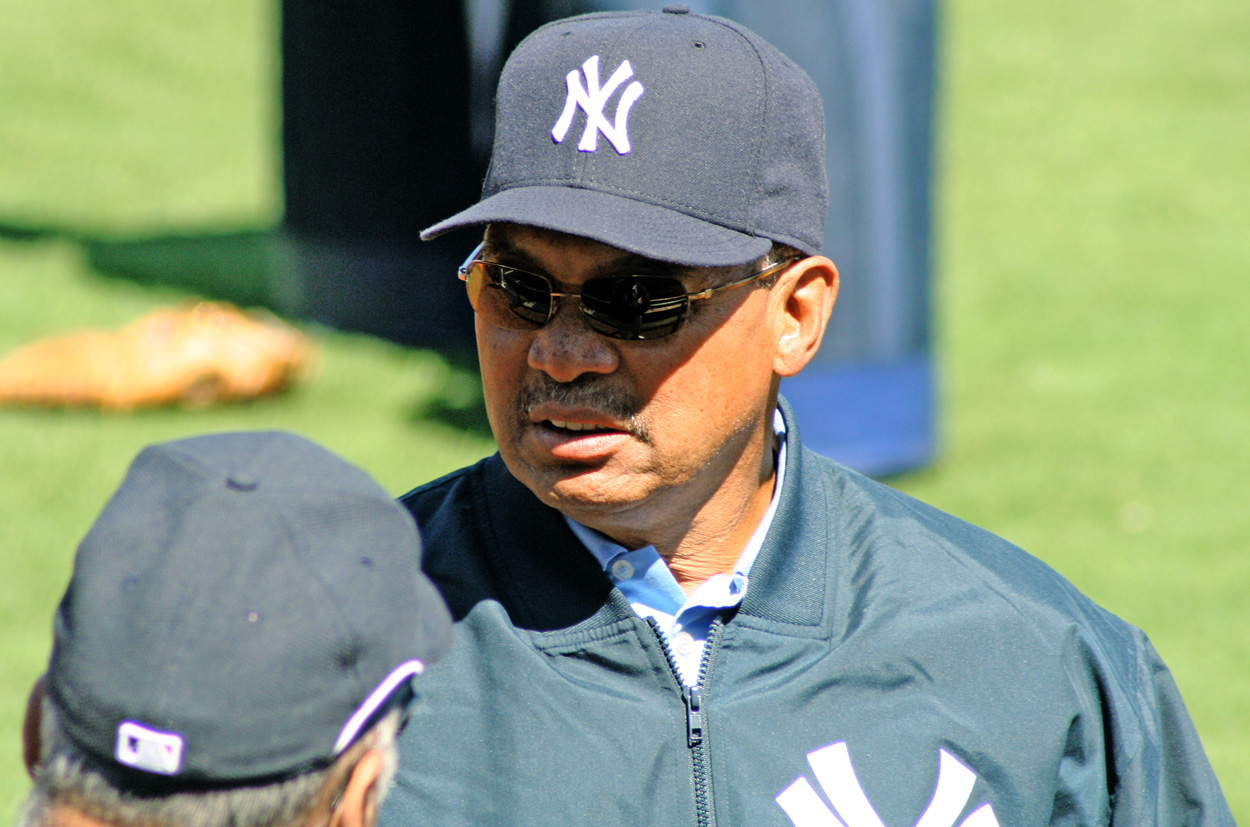
Photo by Googie man, CC BY-SA 3.0, via Wikimedia Commons
On October 18, 1977, Reggie Jackson stepped to the plate at Yankee Stadium in Game 6 of the World Series and hit three home runs on three consecutive pitches from three different Dodgers pitchers. The crowd chanted his name. A candy bar already bore it. And somewhere in a shoebox, in a closet, in a house nobody was thinking about, a 1969 Topps card with his rookie portrait sat waiting for the world to catch up with its value.
Today, the 1969 Topps Reggie Jackson #260 is one of the most sought-after baseball rookie cards of the 1960s. Only one copy has ever graded PSA 10. It sold for $1,005,600.
Quick Value Summary
| Detail | Info |
|---|---|
| Item | 1969 Topps Reggie Jackson #260 |
| Year | 1969 |
| Category | Sports Cards |
| Good (PSA 2-3) | $100 - $160 |
| Very Good (PSA 4) | $250 - $295 |
| Excellent (PSA 5-6) | $346 - $535 |
| Near Mint (PSA 7-8) | $1,540 - $5,889 |
| Mint (PSA 9) | $68,760 |
| Gem Mint (PSA 10) | $1,005,600 |
| Record Sale | $1,005,600 (PSA 10, one of one) |
| Rarity | Common in low grades, extremely rare in PSA 9+ |
The Story
Reggie Jackson arrived in the majors in 1967 with the Kansas City Athletics, but his 1969 Topps card marks his official Topps rookie appearance. By the time this card hit packs, Jackson was already making noise. In 1969, he hit 47 home runs before the All-Star break, putting him on pace to challenge Roger Maris's single-season record. He finished with 47 for the year, falling short of the record but establishing himself as the most exciting young power hitter in the American League.
The card itself features a clean portrait of Jackson against a bright blue background. Unlike many rookies of the era who shared multi-player cards, Jackson got the stage to himself, card #260 in the set. That solo billing has made it a cleaner collectible and a more recognizable piece of cardboard.
Jackson went on to play 21 seasons, slug 563 home runs, earn 14 All-Star selections, and win five World Series rings. His Hall of Fame induction in 1993 cemented what collectors already knew: this card was going to matter for a long time.
How to Identify It
Key visual markers: The card shows a young Jackson in an Oakland Athletics cap against a blue background. His name appears in a yellow banner at the bottom, with "ATHLETICS" above and his position listed. The card number 260 is on the back.
Print position matters: Card #260 sits on the printed sheet in a position that makes it vulnerable to centering issues. Finding well-centered examples is harder than with many other cards in the set.
Common confusions: Don't confuse this with the 1969 Topps Deckle Edge #35 (also featuring Jackson) or the 1969 Topps Super #44. Those are separate inserts, not the base rookie card. The base card is standard size (2.5" x 3.5") with the typical 1969 Topps border design.
Quick checks: Look for the distinctive yellow name banner and blue background. The card back has statistics from his brief 1967-1968 stints. Genuine cards from 1969 have a specific paper stock feel that reprints can't replicate.
Value by Condition
PSA 1-2 (Poor to Good): $84 - $147 Heavy creasing, rounded corners, staining, or significant wear. At this grade, you're buying the name and the history, not the condition. A PSA 1 recently sold for about $98. Over 900 copies have been graded at PSA 1-2.
PSA 3-4 (Very Good to VG-Excellent): $160 - $295 Noticeable wear on corners and edges, maybe a light crease or two. Still very presentable in a holder. PSA 4 copies move regularly around $250-$295, with a population of 2,418 graded copies. This is the sweet spot for collectors who want an authentic graded rookie without spending thousands.
PSA 5-6 (Excellent to EX-Mint): $346 - $535 Minor corner wear, clean surfaces, no major creases. The card looks sharp from arm's length. PSA 5 copies average around $346, and PSA 6 copies average about $535. Combined population across these two grades is about 4,267.
PSA 7 (Near Mint): $1,540 This is where prices start climbing steeply. Only minor imperfections visible under close inspection. A PSA 7 typically sells around $1,540, with 1,367 copies at this grade.
PSA 8 (NM-Mint): $5,490 - $5,889 Sharp corners, clean surfaces, strong centering. A PSA 8 recently sold for $5,490 in early 2026. Population: 588 copies. This grade has been trending upward, gaining about 29% in the past 30 days.
PSA 9 (Mint): $68,760 Only 41 copies have ever graded PSA 9. At this level, the card is nearly flawless, with only the tiniest imperfections preventing a perfect grade. Recent sales cluster around $68,760. The scarcity at this grade is what drives the price: fewer than 0.3% of all graded copies achieve PSA 9 or better.
PSA 10 (Gem Mint): $1,005,600 Exactly one copy exists at PSA 10. One. Out of more than 12,000 copies submitted over the decades, a single card achieved perfection. It sold for $1,005,600, making it one of the most valuable post-war baseball cards in existence.
Known Variations
The 1969 Topps Reggie Jackson #260 does not have major print variations like some other cards in the set. However, collectors should be aware of a few nuances:
Centering: The most meaningful "variation" is centering quality. Cards with 50/50 centering (perfectly centered on both horizontal and vertical axes) command premiums at every grade level, especially PSA 7 and above.
Color saturation: Print runs showed variation in the blue background intensity. Deeper, richer blue cards are more visually appealing and can bring slightly higher prices in raw sales.
White-back vs. cream-back: Some cards in the 1969 set show slightly different paper tones on the reverse. This doesn't dramatically affect value but is noted by advanced collectors.
Authentication and Fakes
Fakes of this card do exist, though they're less common than fakes of pre-war cards. Here's what to watch for:
Reprints: Topps issued official reprints of this card in later years. These are clearly marked on the back as reprints, but unscrupulous sellers sometimes trim or alter the markings. Always check the back text carefully.
Trimmed cards: Some sellers trim worn edges to make the card appear in better condition. A trimmed card submitted to PSA will receive an "Altered" designation, which drastically reduces value. Look for edges that seem unusually clean relative to the corners.
Color copies: Modern printing technology can produce convincing-looking fakes. The paper stock, ink saturation, and surface texture of genuine 1969 Topps cards are distinctive. When in doubt, hold it next to a known authentic card from the same set.
Professional grading is essential for any example you plan to sell or invest in. PSA, BGS, and SGC all authenticate this card. At current values, the $20-$50 grading fee is trivial insurance against a costly mistake. For declared values above $5,000, PSA charges $100-$300+ depending on service tier and turnaround time.
Where to Sell
If you have a 1969 Topps Reggie Jackson rookie, here are your best options:
Auction houses (PSA 7 and above): Heritage Auctions, Goldin, and REA regularly handle this card. Auction premiums are typically 15-20% for buyers, and sellers often receive 85-90% of the hammer price. For PSA 8 and above, the auction route creates competition that can push prices beyond private sale levels.
eBay (all grades): The most liquid marketplace for this card. PSA 4 copies sell within days. Expect eBay fees around 13% of the final price. For cards under $5,000, eBay's reach and buyer pool make it hard to beat.
Card shows and local dealers (PSA 5 and below): Quick cash, but expect 60-70% of market value. Good for sellers who want immediate payment without fees or shipping hassles.
Expected total costs for a PSA 8 sale (~$5,500): Grading (if not already graded): $50-$150. Insured shipping: $30-$50. eBay fees: ~$715. Net to seller: roughly $4,700-$5,200.
Not sure about the condition of yours? Upload a photo to Curio Comp for a quick AI-powered estimate.
Explore More
Related Items
Have This Item?
Our AI appraisal tool is coming soon. Upload photos, get instant identification and valuation.
Get Appraisal