Stradivarius Cello with Documented Provenance: What Collectors and Musicians Need to Know
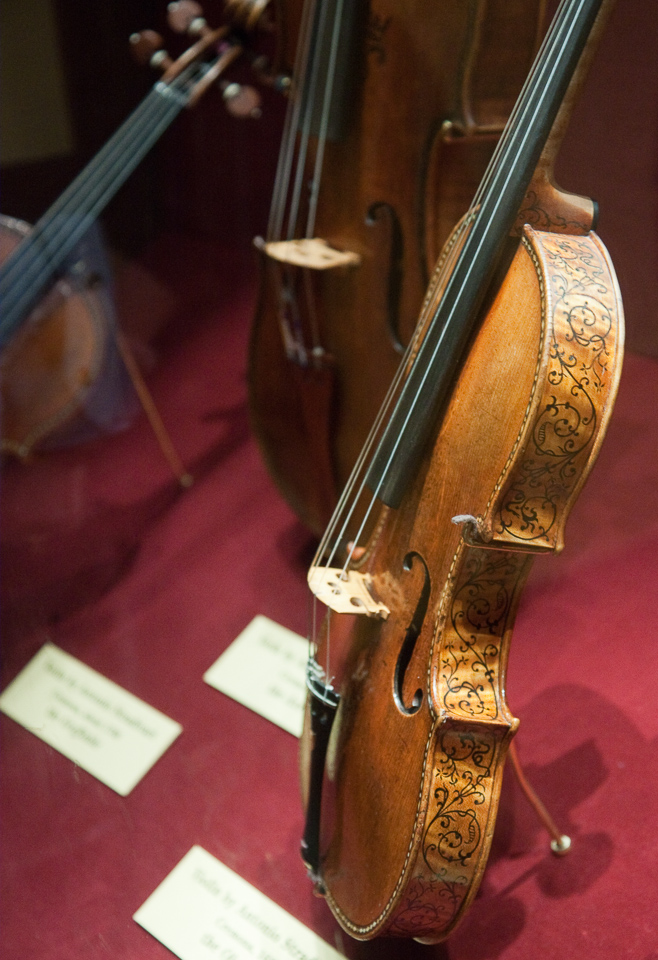
Stradivarius Ole Bull violin, Smithsonian Institution, Washington D.C. Photo via Wikimedia Commons. CC-BY-SA license.
If you had to name the most valuable collectible musical instruments in existence, the list would be dominated by a single name: Antonio Stradivari. The violins, cellos, and violas produced at his workshop in Cremona, Italy, between approximately 1666 and 1737 remain, more than three centuries later, the finest and most sought-after string instruments ever made. A Stradivarius cello with solid documented provenance is not merely a collectible; it is one of the rarest, most financially significant, and most historically important objects that exists in any collecting category.
Who Was Antonio Stradivari?
Antonio Stradivari (1644-1737) was an Italian luthier (string instrument maker) who spent his entire career in Cremona, the hub of Italian instrument making. He is believed to have produced approximately 960 instruments during his lifetime, of which around 650 survive today, including roughly 450-500 violins, 50-60 violas, and only about 60-63 cellos.
The cellos are the rarest category of Stradivari instruments by a significant margin. While violins and violas were produced throughout his career, Stradivari made most of his cellos in two primary periods:
Pre-1707 "B-form": Earlier, larger-bodied instruments
Post-1707 reduced form: Many early cellos were cut down to these smaller dimensions to meet changing musical demands
The specific design, varnish, wood selection, and construction methods Stradivari used have never been fully replicated despite centuries of analysis. Modern luthiers working with scientific instruments and historical research still cannot consistently match the acoustic properties of the finest Stradivari instruments.
The Rarity of Stradivarius Cellos
With only 60-63 known surviving Stradivarius cellos, each one is an extraordinary object. For context:
There are more Picasso paintings in existence
There are more known Rembrandt drawings
First-edition Shakespeare folios outnumber Stradivari cellos
This extreme scarcity, combined with the instruments' direct utility as the finest performing cellos available, creates a supply-demand situation unlike any other in the collecting world. Most of these cellos are held by:
- Major cultural institutions and foundations that loan them to performers
- Private collectors (often wealthy patrons of the arts)
- A handful of performers who either own or have long-term loans
Very few Stradivarius cellos come to market in any given decade, making pricing norms difficult to establish from recent comparables.
Documented Provenance: Why It Matters Enormously
In the Stradivarius market, provenance documentation is not merely helpful; it is essentially required for authentication and valuation. Proper provenance includes:
Workshop Records: The Stradivari family maintained records, and some instruments can be traced directly to workshop documentation.
Expert Analysis: Every major Stradivarius has been examined and certified by leading violin experts, including the firm of Hills & Sons (which maintained comprehensive records for over a century), major auction houses, and independent experts.
Historical Ownership Records: Bills of sale, estate inventories, auction records, and correspondence documenting the instrument's journey through history.
Physical Examination by Expert Consensus: No Stradivarius changes hands at major levels without being examined by multiple recognized experts.
Scientific Analysis: Tree ring dating (dendrochronology), varnish analysis, X-ray examination, and CT scanning have been applied to many instruments to confirm construction dates and authenticity.
Instruments without clear, documented provenance face deep skepticism in the market. The history of Stradivarius fakes, misattributions, and copied labels (virtually every German workshop of the 18th and 19th centuries put "Antonius Stradivarius Cremonensis" labels in their instruments) means that undocumented instruments require extraordinary validation before any expert will certify them.
Current Market Values
Public sales of authenticated Stradivari cellos are rare events, but documented auction results provide benchmarks:
| Sale | Year | Price |
|---|---|---|
| "Duport" Stradivarius cello | 1998 | $4.5 million (Sotheby's) |
| "Feuermann" Stradivarius cello | 2020 | ~$7 million (private) |
| Various examples (estimate) | 2020s | $5 - $20 million |
Private sales, which are more common than public auctions for instruments at this level, often occur at values not publicly disclosed. The consensus among experts is that fine, well-documented Stradivarius cellos in good playing condition trade in the range of $5 million to $20 million depending on historical importance, condition, and provenance quality.
For reference, the most valuable instrument ever sold publicly was the "Molitor" Stradivarius violin at approximately $3.6 million in 2010. Cellos tend to command higher prices than violins due to their greater scarcity.
The "Playing" Factor
Unlike most collectibles, Stradivarius instruments are simultaneously historical artifacts and functioning tools. Most major examples are played regularly by world-class performers, often through loan arrangements organized by foundations or collectors.
This creates an unusual dynamic:
Playing wear (from rosin, handling, and use) is normal and expected
Instruments that have been played continuously maintain their acoustic properties better than those in long-term storage
"Pristine" original condition means something different here than in most collecting categories
Authentic use by recognized artists (Yo-Yo Ma, Mstislav Rostropovich, and other cello legends have played specific named Stradivari cellos) adds to rather than detracts from provenance quality.
Authentication Process
For any instrument claiming to be a Stradivarius, authentication involves:
- Visual examination by multiple experts: Including assessment of varnish, wood aging, construction details
- Scientific testing: Dendrochronology of the wood, spectrographic analysis of the varnish
- Comparison to known authentic instruments: Measurements, design details
- Historical documentation review: All available paper trail examined
- Institutional consultation: Major violin institutes in Cremona maintain comprehensive reference databases
If any of these areas raises questions, the attribution will not be confirmed.
Named Instruments
Many of the known Stradivarius cellos have been given names, typically from prominent past owners:
The Duport (named for Jean-Louis Duport, the cellist)
The Feuermann (named for Emanuel Feuermann)
The Davidov (played by Jacqueline du Pre)
The Cristiani
The Gore-Booth
Named instruments carry additional historical weight and documentation that can influence value.
Final Thoughts
A Stradivarius cello with documented provenance is, without qualification, one of the most significant objects that can be held in a private collection. It represents the pinnacle of three centuries of instrument-making achievement, an irreplaceable physical connection to musical history, and a genuine store of value that has appreciated dramatically over any long time horizon. The barriers to entry are immense, as is the due diligence required. But for those who can clear those barriers, there is nothing quite like it in the world of collecting.
Related Items
Have This Item?
Our AI appraisal tool is coming soon. Upload photos, get instant identification and valuation.
Get Appraisal