1965 Rickenbacker 4001 Bass (Mapleglo, Paul McCartney)
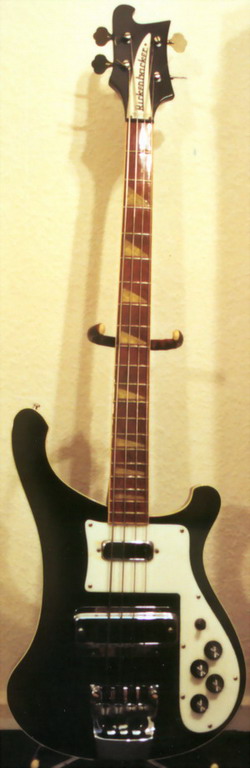
Photo by Bassman, CC BY-SA 3.0, via Wikimedia Commons
There is a sound that defines an era. For the mid-1960s through the 1970s, that sound often came from a Rickenbacker 4001 bass, its distinctive growl and chiming treble cutting through the mix on some of the most celebrated recordings ever made. When Paul McCartney accepted a left-handed 4001S from Rickenbacker president Francis Hall in August 1965, he didn't just acquire a new instrument. He gave the world a new sonic palette that would color everything from Rubber Soul to Sgt. Pepper's Lonely Hearts Club Band and beyond.
The 1965 Rickenbacker 4001 in Mapleglo (Rickenbacker's name for their natural maple finish) represents the golden age of this legendary bass. With its crested-wave body shape, through-neck construction, and dual single-coil pickups, a mid-1960s 4001 is one of the most sought-after vintage basses on the planet. Whether you are a Beatles completist, a vintage instrument collector, or a working musician who craves that unmistakable tone, the 1965 4001 Mapleglo sits at the intersection of history, craftsmanship, and pure rock and roll.
The Story of Rickenbacker and the 4001
Rickenbacker (originally Rickenbacher) holds a unique place in guitar history as the company that essentially invented the electric guitar. Founded in 1931 by Adolph Rickenbacker and George Beauchamp in Los Angeles, California, the company was building electric instruments years before Gibson or Fender entered the game.
The Rickenbacker 4000 series bass debuted in 1957 with the single-pickup Model 4000, designed by Roger Rossmeisl and inspired by the company's solid-body guitar designs. The 4001 arrived in 1961 as the deluxe two-pickup version, featuring maple and walnut through-neck construction, a rosewood (occasionally ebony) fingerboard, distinctive triangle inlays, and checkered black-and-white binding throughout.
The "S" variant (4001S, also known as Model 1999 in export markets) was the standard version without binding and with dot inlays. This is actually the version that both Paul McCartney and Chris Squire of Yes played, though the 4001 name has become the catch-all term for the entire family.
Mapleglo: A Finish Worth Knowing
Rickenbacker's finish names are part of the brand's distinctive vocabulary. Mapleglo refers to their natural, clear-lacquered maple finish that showcases the wood grain of the body. Unlike Fireglo (their sunburst variant) or Jetglo (solid black), Mapleglo celebrates the raw beauty of the tone woods underneath. On a 1965 specimen, decades of aging have typically turned the originally pale maple into a warm, honey-amber tone that collectors find irresistible.
The Mapleglo finish on a mid-1960s 4001 is relatively uncommon compared to Fireglo models, which were the most popular finish choice of the era. This rarity factor adds a premium to Mapleglo examples, particularly those from the 1964 to 1967 period.
The McCartney Connection
The story of McCartney's Rickenbacker is one of rock's great tales. Rickenbacker president Francis Hall first presented a specially built left-handed 4001S (serial number DA23, indicating a January 1964 manufacture date) to McCartney during the Beatles' first American tour in February 1964. McCartney, still deeply attached to his Hofner 500/1 "violin bass," politely declined. Hall even offered in writing to ship a similar bass free of charge in May 1964, but McCartney passed again.
It wasn't until the Beatles returned to Los Angeles in August 1965 that Francis and his son John presented the bass once more. This time, McCartney accepted. The Rickenbacker quickly became his primary studio instrument, its bright, punchy character perfectly complementing the increasingly sophisticated arrangements the Beatles were pursuing. You can hear the Rickenbacker's distinctive voice all over Rubber Soul, Revolver, and Sgt. Pepper's.
What Makes the 1965 Model Special
The mid-1960s represents a sweet spot in Rickenbacker 4001 production. Here's what distinguishes a 1965 model:
Construction: The maple and walnut through-neck design means the neck wood runs the entire length of the instrument. The bridge, tailpiece, pickups, and strap button are all mounted on what is technically an extension of the neck, with the body "wings" glued on either side. This construction method provides exceptional sustain and structural integrity.
Pickups: The 1965 models feature the original "toaster top" pickup in the neck position and a horseshoe pickup design at the bridge. These pickups deliver the classic Rickenbacker tone: bright, articulate, with a midrange growl that sits beautifully in a band mix.
Hardware: Chrome hardware, twin truss rods, and the iconic "R" tailpiece. The stereo Rick-O-Sound wiring (allowing each pickup to be sent to a separate amplifier) was available by special order in 1965, though it wouldn't be standard until the early 1970s.
Scale Length: The full 34-inch scale length provides the bass with its characteristically tight, focused low end.
Condition Grading Guide
| Grade | Description | Typical Market Impact |
|---|---|---|
| Mint/NOS | Unplayed or virtually unplayed. All original parts, case, and documentation. No wear. | Top dollar, 100% of market value |
| Excellent | Light play wear only. All original parts. Minor surface scratches, no structural issues. | 85-95% of top value |
| Very Good | Moderate play wear. May have minor dings, light buckle rash, or small touch-ups. All electronics functional. | 70-85% of top value |
| Good | Noticeable wear, possible minor repairs. Original pickups and hardware intact. Plays well. | 50-70% of top value |
| Fair | Significant wear, possible replaced parts (tuners, bridge, pickguard). May need setup work. | 30-50% of top value |
| Poor | Heavy modifications, refinished, missing original parts, structural repairs. | 15-30% of top value |
Authentication: What to Look For
Vintage Rickenbacker basses are frequently misrepresented, so knowing what to check is essential.
Serial Numbers: Pre-1960 Rickenbackers used letter codes. By 1965, serial numbers followed a recognizable pattern. The serial is typically found on the jackplate or under a pickup cover. Cross-reference any serial with known Rickenbacker databases and production records.
Neck Construction: Genuine 4001 basses have a true through-neck, meaning you can see the neck wood running through the body on both the top and back. If the body appears to be one piece of wood with a bolt-on or set neck, it's not a real 4001.
Finish Authenticity: Original Mapleglo finish from the 1960s will have aged naturally to a warm amber. Refins are common and dramatically affect value. Look for finish checking (fine cracks in the lacquer) consistent with age, even lacquer thickness, and no sanding marks beneath the finish.
Hardware Details: Original 1965 tuners were Kluson-style open-gear units. The bridge and tailpiece should show era-appropriate chrome plating and patina. Replacement tuners are one of the most common modifications.
Pickups: Original toaster-top and horseshoe pickups have specific winding characteristics and resistance readings. A qualified tech can measure these to verify originality.
Body Shape: The crested-wave body profile evolved slightly over the decades. A genuine mid-1960s body has subtly different proportions than later models. Compare carefully against documented examples.
Weight: Vintage Rickenbacker 4001 basses typically weigh between 8.5 and 10 pounds, depending on the specific wood density. Dramatically lighter or heavier instruments warrant closer inspection.
Market Value and Recent Auction Results
The vintage Rickenbacker 4001 market has remained strong and relatively stable, with 1960s examples commanding the highest prices.
For a 1965 Rickenbacker 4001 in Mapleglo, expect the following price ranges:
Excellent all-original condition: $8,000 to $15,000 or more, depending on documentation and provenance. Left-handed examples (like McCartney's) command significantly higher prices due to extreme rarity.
Very Good condition with minor issues: $5,000 to $8,000.
Good condition or with some replaced parts: $3,000 to $5,000.
For context, average-condition 4001 basses from the 1970s typically sell for $2,500 to $4,000. The 1960s premium reflects both the McCartney association and the lower production numbers from that era.
Recent notable sales include vintage 4001 basses from the mid-1960s reaching $10,000 to $18,000 at specialist dealers and auction houses. The Rickenbacker 4001C64S reissue (Rickenbacker's modern recreation of McCartney's bass) retails new for approximately $3,500, which gives a useful benchmark for understanding the premium that genuine vintage examples command.
Collecting Tips
Buy the condition, not just the year. A pristine 1967 will often outperform a beat-up 1965 at auction.
Documentation matters. Original cases, purchase receipts, and any provenance information significantly boost value.
Be patient. Genuine 1965 Mapleglo examples are uncommon. Rushing into a purchase without thorough verification is the most common collector mistake.
Get a professional inspection. Before any purchase over $5,000, have the instrument examined by a Rickenbacker specialist or a qualified vintage guitar appraiser.
Consider playability. These are not just museum pieces. A well-maintained 1965 Rickenbacker 4001 sounds absolutely magnificent and remains a fully viable professional instrument sixty years later.
Why the 4001 Sounds Different
One of the questions collectors and players ask most frequently is why the vintage 4001 sounds so different from modern basses, even from Rickenbacker's own current models. The answer lies in a combination of factors that are difficult to replicate.
The original single-coil pickups in a 1965 4001 have a particular winding pattern and magnet configuration that produces a bright, almost piano-like attack with a complex harmonic overtone series. The toaster-top neck pickup delivers warm, round fundamentals, while the horseshoe bridge pickup adds that signature treble bite. When blended together, these pickups create a midrange presence that engineers describe as "cutting through the mix without competing with the guitars."
The through-neck maple and walnut construction contributes substantial sustain and a resonant character that bolt-on designs simply cannot match. Add to this the fact that the lacquer finish on a 60-year-old instrument has hardened and cured in ways that subtly affect the wood's resonance, and you begin to understand why players will pay a significant premium for the genuine vintage article.
The 34-inch scale length, combined with the relatively narrow nut width and slim neck profile, gives the 4001 a fast, comfortable playing feel that was ahead of its time. Many modern players accustomed to chunky P-Bass necks are surprised by how nimble a vintage Rickenbacker feels in the hands.
Caring for a Vintage 4001
If you're fortunate enough to own a 1965 Rickenbacker 4001, proper care is essential to preserving both its condition and its value.
Storage: Keep the instrument in its original case (or a quality hardshell case) when not in use. Maintain a consistent temperature between 65 and 75 degrees Fahrenheit and relative humidity between 40% and 55%. Sudden temperature swings are the enemy of vintage lacquer finishes.
Cleaning: Use only a soft, dry cloth for routine cleaning. Avoid modern guitar polishes, which may contain silicone or abrasives that can damage the original finish. For stubborn grime, a slightly damp cloth followed by immediate drying is sufficient.
Strings and Setup: Use the string gauge recommended for the original bridge and nut slot dimensions. Overly heavy strings can stress the neck and bridge. If you play the instrument regularly, have a qualified technician perform a setup annually, paying special attention to the dual truss rods.
Electronics: Original potentiometers and capacitors from the 1960s can become scratchy or intermittent. A skilled tech can clean these components without replacement, preserving originality. Resist the temptation to "upgrade" the electronics in a vintage instrument.
Investment Potential
Vintage Rickenbacker 4001 basses have shown consistent appreciation over the past two decades. While past performance never guarantees future returns, several factors suggest continued strong demand:
The McCartney connection ensures enduring cultural relevance. Unlike some vintage instruments whose appeal is tied to niche musical genres, the Beatles' influence spans virtually every corner of popular music.
Supply is permanently fixed (Rickenbacker's 1960s production numbers were modest), while demand continues to grow as new generations discover the instrument through reissues, documentaries, and the timeless appeal of Beatles recordings.
The broader vintage guitar market has matured significantly, with auction houses, dealers, and online marketplaces providing transparency in pricing and provenance verification that makes collecting more accessible than ever.
The Legacy
The Rickenbacker 4001 was officially replaced by the 4003 in the 1980s, though several reissue models (the 4001V63, 4001C64, and 4001C64S) have kept the spirit alive for players who want that vintage specification in a new instrument. But nothing truly replaces the resonance, the patina, and the history embedded in an original 1960s Rickenbacker 4001.
When you hold a 1965 4001 in Mapleglo, you're holding a piece of the moment when popular music transformed from simple pop songs into an art form. The same design, the same pickups, the same through-neck construction that gave McCartney his voice on those groundbreaking recordings. That's not nostalgia. That's heritage.
Related Items
Have This Item?
Our AI appraisal tool is coming soon. Upload photos, get instant identification and valuation.
Get Appraisal